




A club from the Rhondda Valley is proving that grassroots rugby in Wales is alive and kicking – and still a big part of the community.
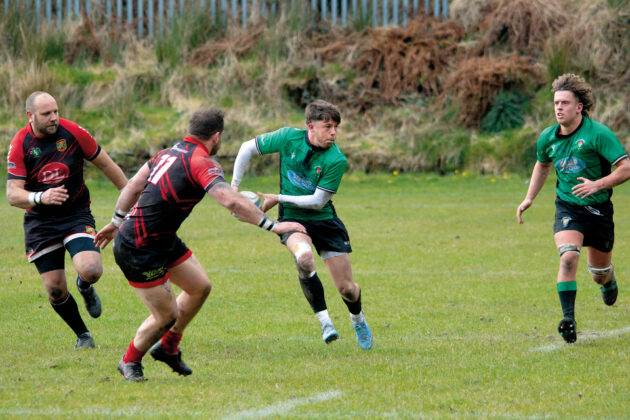
Forty-five lads from the valleys are singing Don McLean, having knocked ten bells out of one another on a draughty hill in the Rhondda Valley all afternoon.
A golf ball is being lobbed about the clubhouse. If it lands in your pint glass, you have to put it down. Plates of chicken curry and chips are being handed out to anybody feeling a bit peckish.
Earlier on, a hundred or so locals from the nearby village of Clydach Vale stood in absolutely Baltic weather in support of their local grassroots side. One bloke loved it so much that after giving relentless lip to the opposition and referee, he was ordered away from the pitch and back down the hill.
Is Cambrian Welfare RFC the most beautiful rugby club in the world? pic.twitter.com/LhH1WIrNip
— Rugby World (@Rugbyworldmag) May 23, 2026
I’ve not paid for a pint. In fact, I’ve had two shots of Sambuca on the house and I’m getting a free lift back to my nearby hotel.
I went to the deepest, darkest corner of the Welsh valleys to see if what we were being told was true. That Welsh rugby is dying.
But after a hazy Saturday in the company of Cambrian Welfare RFC, I can confirm it’s not dead. It’s alive and kicking.
From Treherbert down to Porth Harlequins, there are double-digit rugby clubs still operating in the Rhondda Fawr area and closer to a hundred when you consider the entire valleys.
Tight knit communities bonded by their mining history and shared experiences have made this the core of Welsh rugby for decades and the ideal place to check the heartbeat of the amateur game.
In truth, I could have picked any of the clubs in the valleys for this, but it was Cambrian’s beautiful yet poignant home that pulled me in.
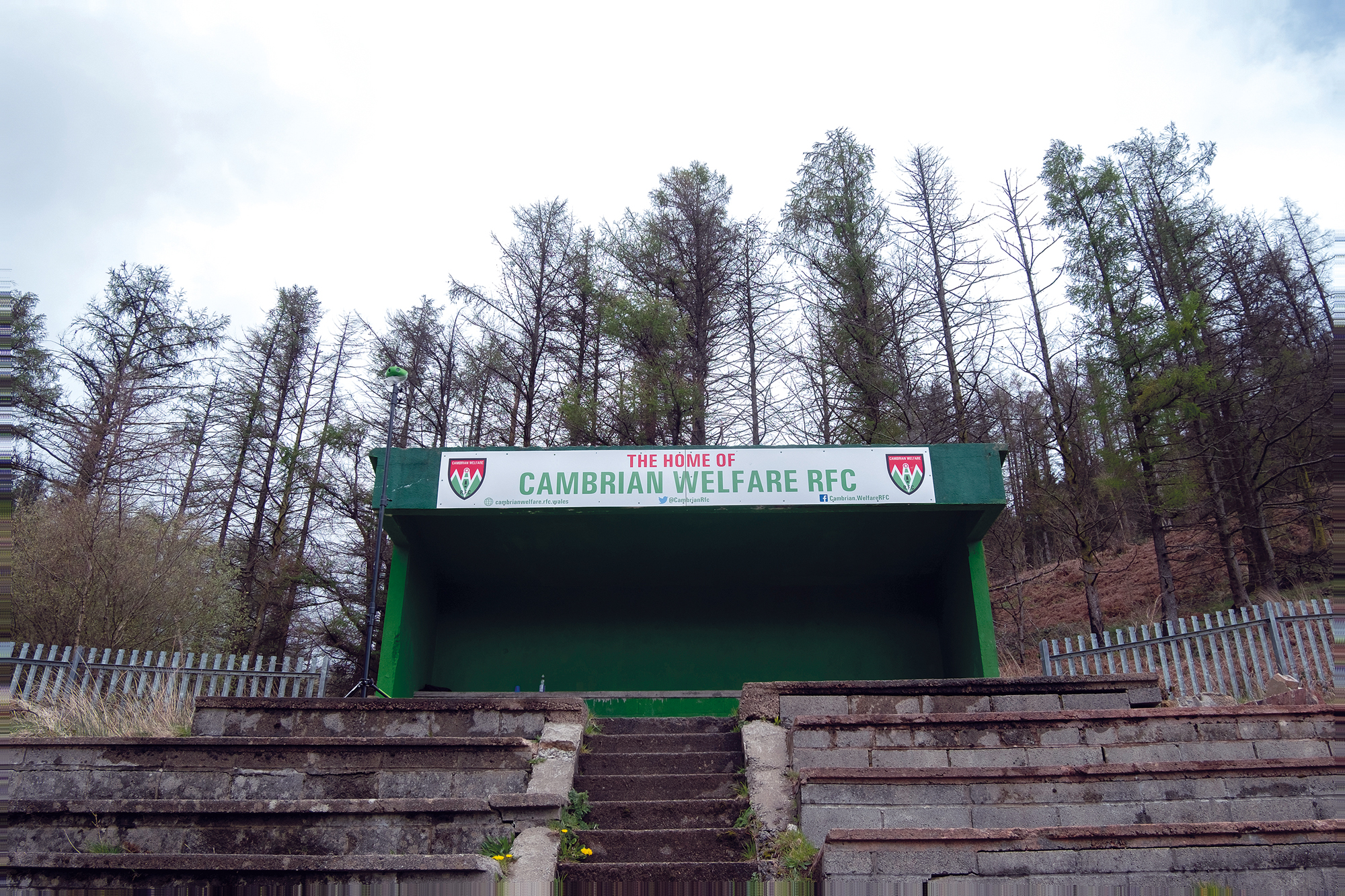
Cambrian Welfare’s one-and-only covered stand (The Rugby Photographer)
Running up that hill
“Cambrian has always been a community club,” explains club president Jonathan Davies. “This was a mining town and the miners’ hand dug that pitch out on the side of the mountain in the early 1900s. They did that in their spare time so that they could have something to do away from the mines.”
The Cambrian Colliery explosion of 1965 that took the lives of 31 miners was followed by the closing of the colliery two years later, sucking the life out of the place. Thankfully there was always rugby to turn to.
“My dad played here when he was younger, so it’s a family thing,” Davies adds. “It was initially just a Sunday team at first, no league or anything, just something for the local people to do. It’s developed from there.”
Cambrian Welfare RFC was first formalised in 1982 and they immediately called ‘The Tump’ their home. Now, twmp is Welsh for hillock but use the word hill with any of the locals and you will quickly be corrected. The Tump sits on the side of a mountain, not a hill, which overlooks the former colliery site, Clydach Vale and the valley below.
And when I arrive for Cambrian’s valleys grudge game against Rhydyfelin, I get off the train in Tonypandy to be confronted by a one-mile walk at 9% average gradient just to get to the pitch. What’s more, so are the opposition.
“Teams don’t like having to come to us, especially when their bus has to park down by the Bush Hotel and they’ve got to walk up those two massive hills to get to the pitch,” Davies laughs.
“To be honest, the walk up from the changing rooms is bad enough! And then when you get here, we will have all four seasons in one day at that pitch. A lot of people think it can be a bit hostile up there too, which it can be if we get a good crowd turn up on the sidelines.”
The view from the top
A pitch on the side of a mountain may be a nightmare to get to, but it’s sure worth it when you arrive. The views from The Tump are unlike anything I’ve seen in world rugby. Genuinely, it is up there with Newlands in Cape Town and Melrose in the Scottish borders. The valleys sweep through the background in a patchwork of green, dotted with terraced houses. Clumps of trees are left strewn by the whirling wind and you can see patches of sunshine and rain forming the sky across the landscape.
Both teams have arrived for the 3pm kick-off as I take refuge under a tree. Some of the home side come still dressed in hi-vis vests, straight from a morning shift on the tools. I later find out that eight of the match-day 23 work for the same dry-lining firm.
By kick-off, there are just shy of 200 or so on the touchline braving the cutting wind. The Welsh hospitality ensures that I’m given a free coffee and burger by a man they call ‘Turk’ as I settle in to watch from my sheltered spot. I must have smelt of London because within minutes I’m approached by a few regulars who both state I’m not from around here.
“You must be the one from World Rugby magazine,” says one. Close but no cigar. Lynfa Harris has been rugby-barmy ever since the days of her dad taking her to Cardiff at the old Arms Park while her mum went shopping.
She tells me how she lost interest after the introduction of regions and instead made Cambrian her love. She explains how she and husband John, who is club vice-president, moved ten doors down from the Bush Hotel clubhouse to ensure they could be on hand should anything at the club need doing.
Lynfa also tells me to stick by her in the clubhouse after the game and she’ll ensure I’m looked after. After all, places like Cambrian rely on the philanthropic goodness of its people to keep things ticking over.
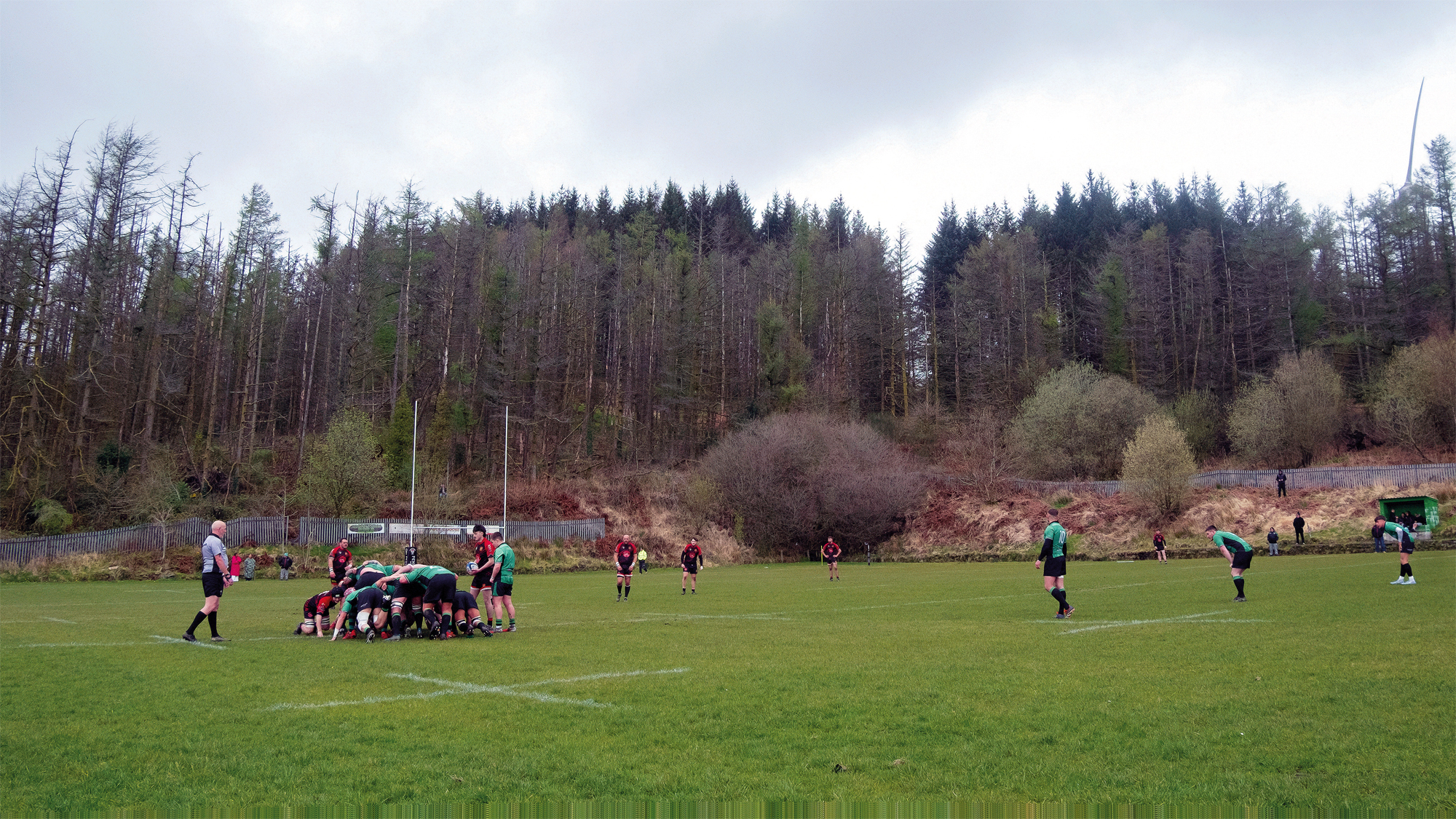
The views from the Tump are up there with Newlands in Cape Town and Melrose in the Scottish borders (The Rugby Photographer)
“Friday is my only day off”
Just like Ricky Isaac. During the game, he is running water and the tee as men’s team manager but over the course of the day I also see him setting up the pitch, helping stock the burger van, liaising with the opposition and even holding a tackle pad. Later, he is pulling pints behind the bar and getting the Premier Sports channel to work on the TV.
“I’m team manager for the seniors, I coach the U10s and then I’m a committee member,” Ricky tells me. “For all the roles, it’s basically a full-time job. On Monday and Wednesday I coach the U10s, then I have training with the seniors on Tuesday and Thursday, with committee meetings in between that.
“Then Saturdays during the season it’s all day. I get here from 11 to help set up the pitch and get it ready for the team. Then I’ll go down to the clubhouse and help behind the bar until we shut, which can be any time. Then I’m back up here on the Sunday morning with the junior team. Friday is my only day off.”
If it seems like a labour of love, that’s because it is. Ricky adds that rugby is still everything to the Welsh and that the club is everything he does. It’s why when Cambrian establish a comfortable lead in the second half, he cannot help but run onto the pitch to join in the celebrations.
It’s a win that all but guarantees their status in Regional One for another season. Which also guarantees a good time in the bar to follow. As promised, Lynfa takes me under her wing and ensures I’m safe as proceedings get going. The usual boat races and match-day awards intersect plates of food and pub snacks.
One of the squad members who is currently injured performs a pitch-perfect rendition of Michael Jackson’s “The Way You Make Me Feel”.
A long way from the Principality
As I enjoy the free pints and shots, I sit down with Jonathan to delve a bit further into the pressures of running an amateur club in 2026. Especially in the wider Welsh context where the professional game is flirting with bankruptcy and the international side is as poor as it has been in decades.
“Running rugby clubs has got much harder,” he explains over a pint of Madri. “In our area we compete with clubs who pay their players. When things are as a tight as they are in normal life, with the cost of living, a lot of the boys will either opt to work on a Saturday or play somewhere that will give lads £50 or £100 a game, which will pay the mortgage at the end of the day. It can be difficult.
“Financials are our biggest challenge,” Davies continues. “Funding from the WRU is not the best but I understand they’ve got a lot of clubs to support across Wales. We have to try hard to get people in the clubhouse every week to make sure we are making the money we need.
“Take our buses for away days, for example. The cheapest one we had this season was £550. So ten away games a year, you’re already looking at £7,000 on bus travel.
“Our biggest earner is the gate money, selling snacks up at the pitch and the clubhouse and bar, but grassroots crowds are not what they used to be either. Money is low on the gate and we do what we can for the snacks but it’s tight. To be honest, it’s a lot of hard work but it is worth it for times like this.”
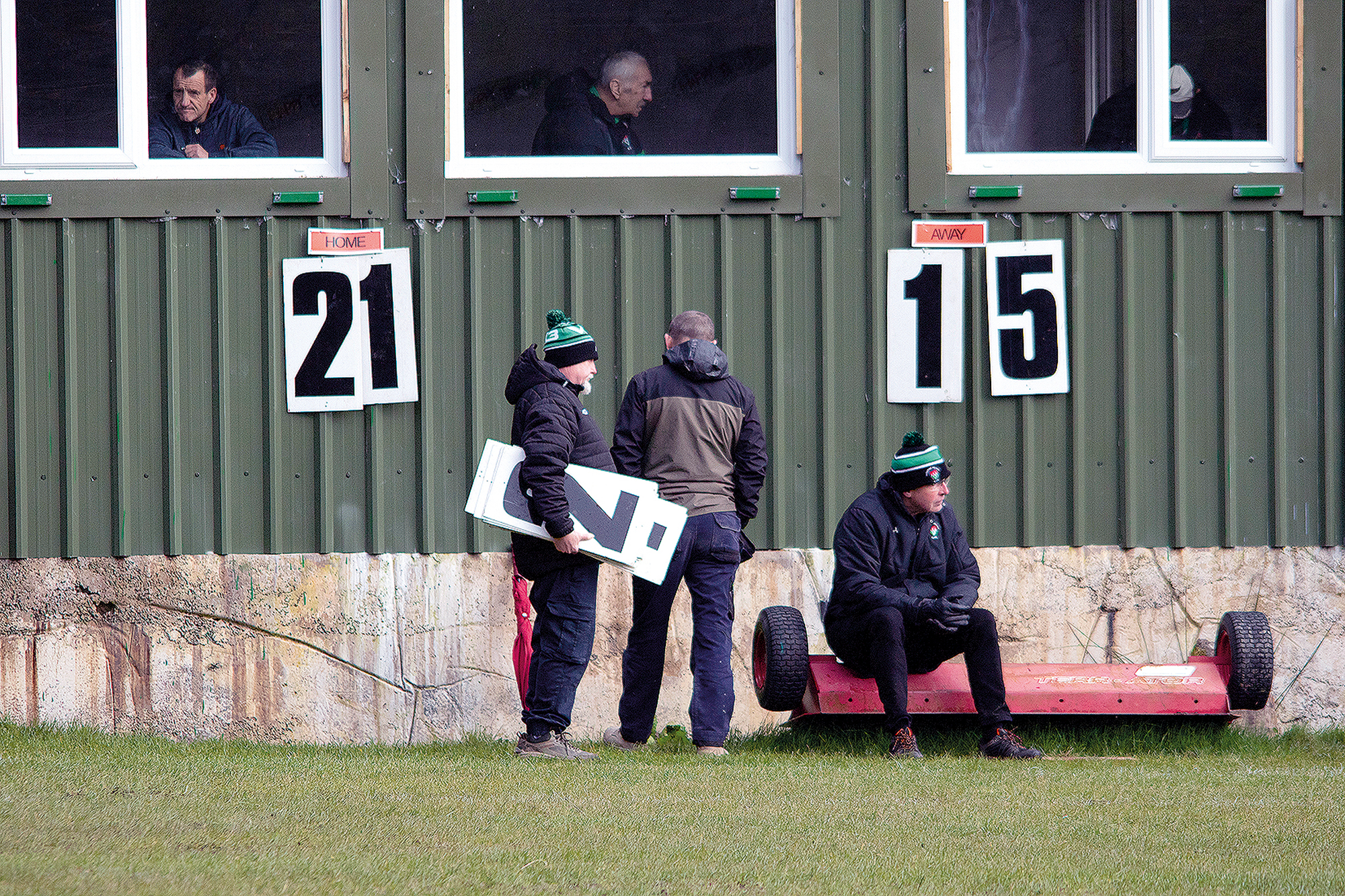
All hands help out on matchday, as Cambrian take on Rhydyfelin (The Rugby Photographer)
“The heart and soul of rugby”
Ricky is listening in. “Look at Welsh rugby from the point of view of the WRU or the regions, it’s a mess,” he adds from the bar.
“Look at it from a grassroots perspective and it’s people who are still turning up and working our asses off, day and night to make it succeed. There are lots of people like me doing this to provide the heart and soul of rugby. It may not feed through to the international stage but there are hundreds of thousands of us who give everything we can.”
I don’t make it back to my hotel until gone midnight down to the free pints and following shots which contribute to a sore head the next morning. The sort that reminds me that I was well looked after by people who love their rugby, love their club and love their community.
So if you are still under the illusion that Welsh rugby is dead, I suggest you get yourself to Clydach Vale and walk up that massive hill to Cambrian where rugby is very much alive.
Download the digital edition of Rugby World straight to your tablet or subscribe to the print edition to get the magazine delivered to your door.