




As Eddie Hearn talks up his client, Henry Pollock, as a potential million-pound player, we look back on an archive interview with a ground-breaking dual-code legend.
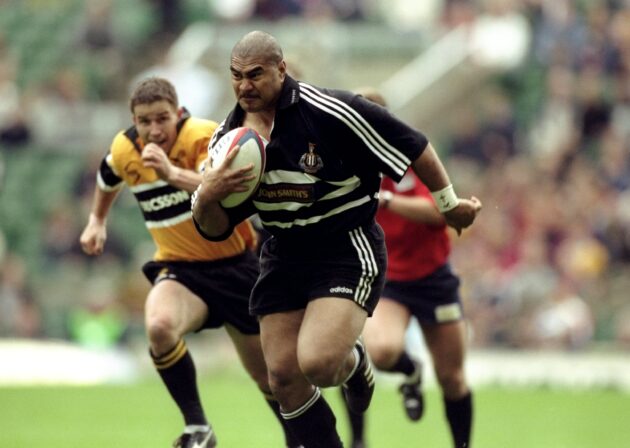
“He’s certainly a seven-figure player,” agent Eddie Hearn said of his client, Henry Pollock, earlier this week. “The way rugby’s going and what Pollock is doing, his value over the next couple of years will skyrocket, and I think the value of rugby will.”
Should the Northampton Saints and England back-row be lucky enough to join the million-pound club, he won’t be the first. In 1997, with professionalism still in its infancy, dual code legend Va’aiga Tuigamala made a big-money transfer from Wasps to Newcastle Rugby Club [rebranded as Newcastle Falcons a few months later].
Not long after the former All Blacks and Wigan rugby league star made his headline-grabbing move, Rugby World’s Alison Kervin met with Tuigamala for an exclusive one-on-one.
Below you can read the full interview from 1997, along with the thoughts of then-columnist Mick Cleary – the latter makes for particularly interesting reading with the benefit of three decades of hindsight.
Sadly, Tuigamala passed away in 2022, aged just 52.
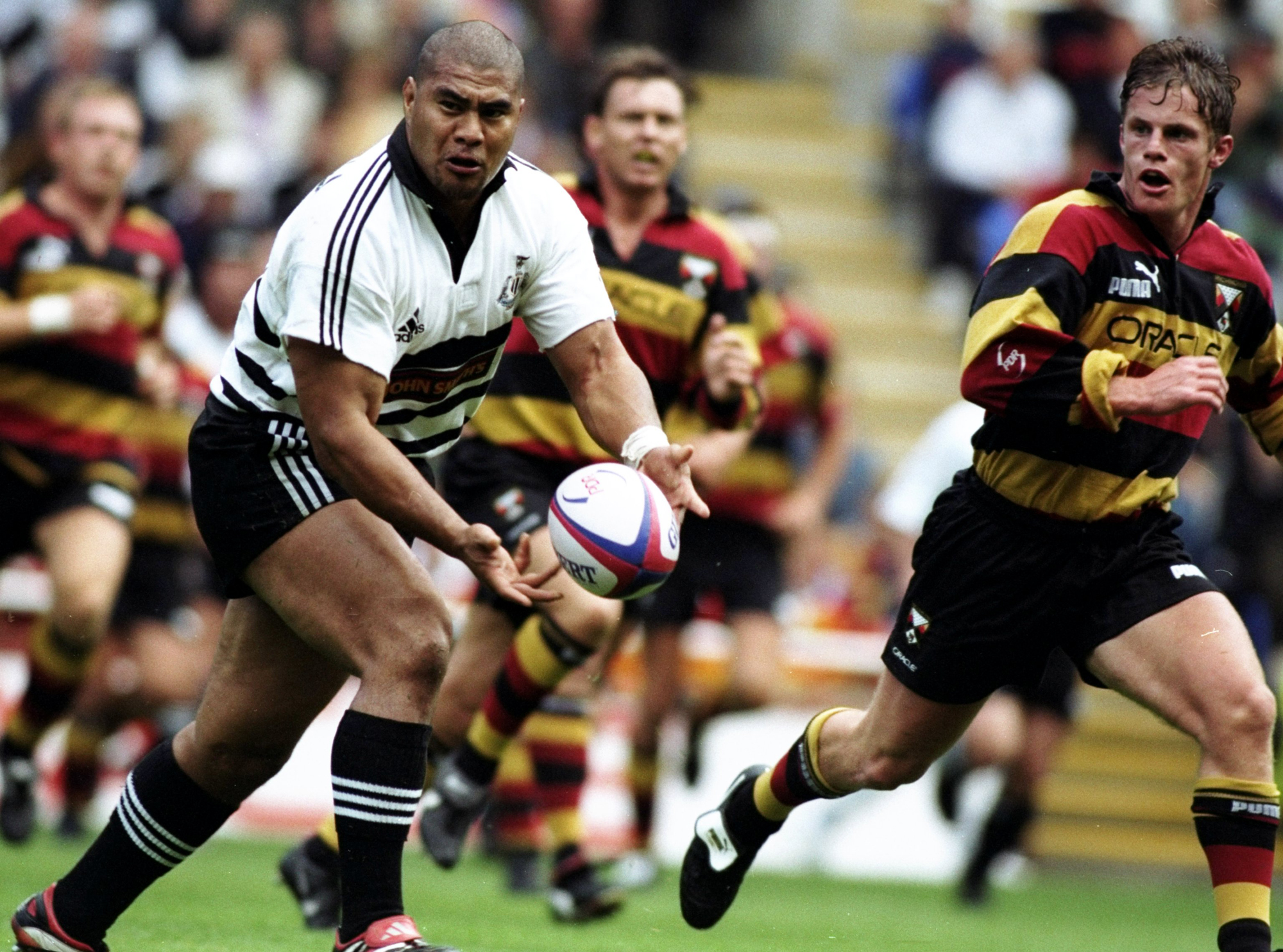
Tuigamala helped make Newcastle one of the Premiership’s top sides in the late ’90s (David Rogers /Allsport)
The life of a rugby journalist would be made so much simpler if players had the decency to conform to simple stereotypes. You know the usual ones – all forwards being cauliflower-eared and stupid, all backs with the brains but not the bulk. Unfortunately, they are rarely so obliging.
Take rugby’s first million-pound man. Is it too much to expect him to arrive in a chauffeur-driven limousine and emerge dripping in gold and sipping champagne? Couldn’t he arrive at the interview fresh from a night on the tiles with Paul Gascoigne and Chris Evans? Alas no.
Rugby fans may sit back and rejoice in the fact that Va’aiga Tuigamala does not fit the stereotype. In common with most of the New Zealand players, he harbours a secret beneath that tough, intimidating physical exterior: he is actually a dedicated sportsman with much more interest in doing the best for his team and his family, than he is in the fame and glamour associated with his new financial worth.
In fact, lnga-the-winger (he says he quite likes the name) has so little interest in the price tag on his head that he is rather bemused by the whole affair.
“Money means so little to me,” he says. “I can’t tell you how little it means. Before I came over here I was living in my mother’s garage – it’s true.
“In the Bible it says; ‘What does it profit a man when he gains the whole world and loses his soul?’ There’s more to life than material things that people seem to strive for – what are they looking for in material things? God is the essential part of my life, not the pursuit of material possessions.”
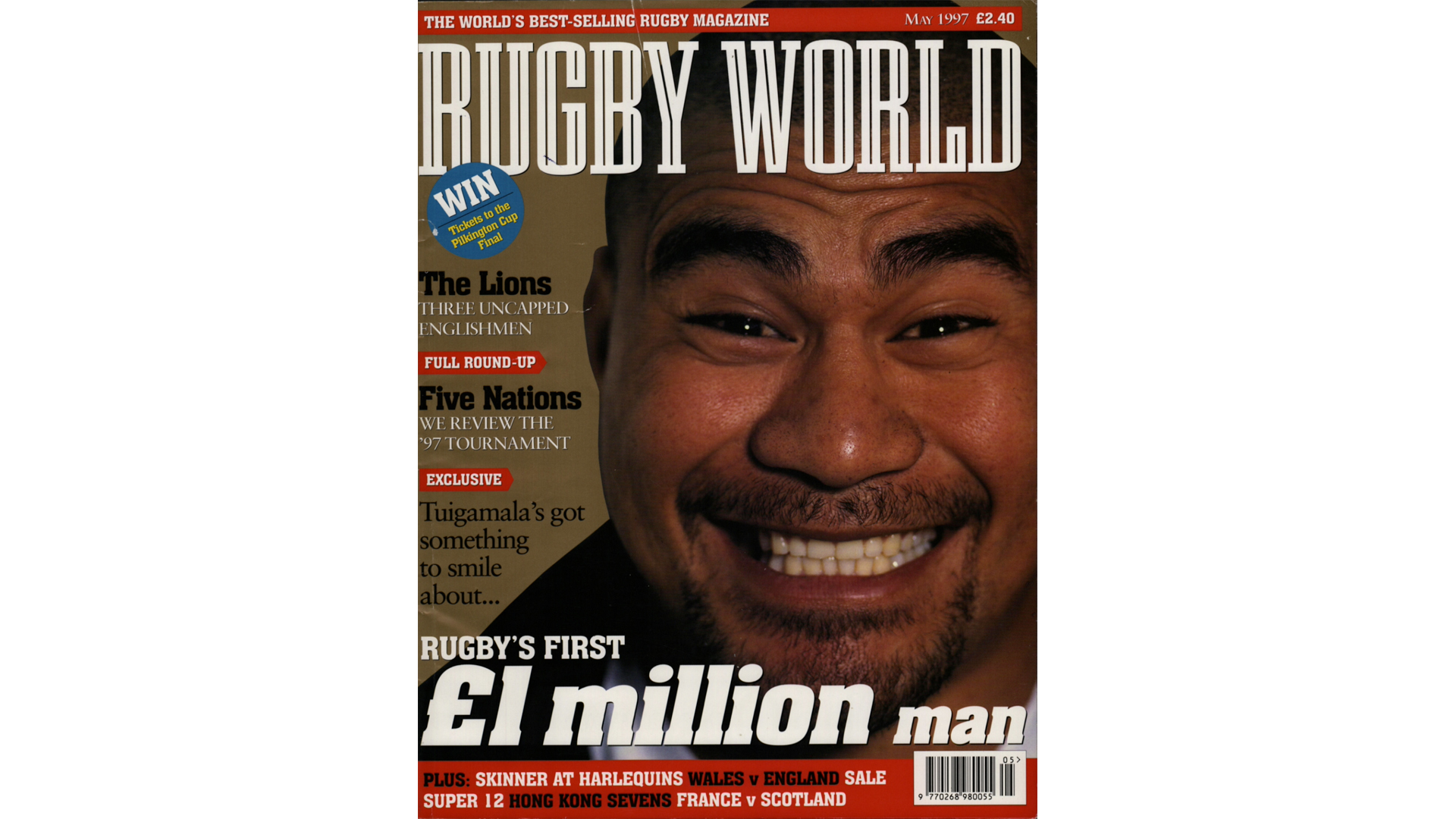
Va’aiga Tuigamala was the cover star of Rugby World’s May 1997 issue
Flash in the pan
Inga is sitting in the bar at Newcastle Rugby Club – his new home after a headline-grabbing million-pound transfer from Wigan. He is the ultimate rugby player, having run out for two international sides – New Zealand and Western Samoa – the former being the greatest team in the world.
He has also played for the best rugby league team in the world at Wigan. He then went back to rugby union in the south with Wasps, and is now in the north with Newcastle. What does it take to be good enough to shine in this number of top-class sides?
- Read more: 11 rugby transfers that shook the game
“My sporting background is complete, and that helps,” he says. “When I was young rugby was one of many other sports that I participated in: I played hockey, basketball, wrestling, weight-lifting, orienteering, yachting and cycling. It all contributed to making me an all-round player.”
But his real skill – his speed off the mark that so flummoxes his opposition – was learnt in entirely different circumstances.
“When people ask me how I learnt to be quick, they always look surprised when I say that it was from dodging all the pots and pans that were thrown at me by my brothers and sisters. Moving off as quickly as possible is my natural reaction now – I just think of those pans.”
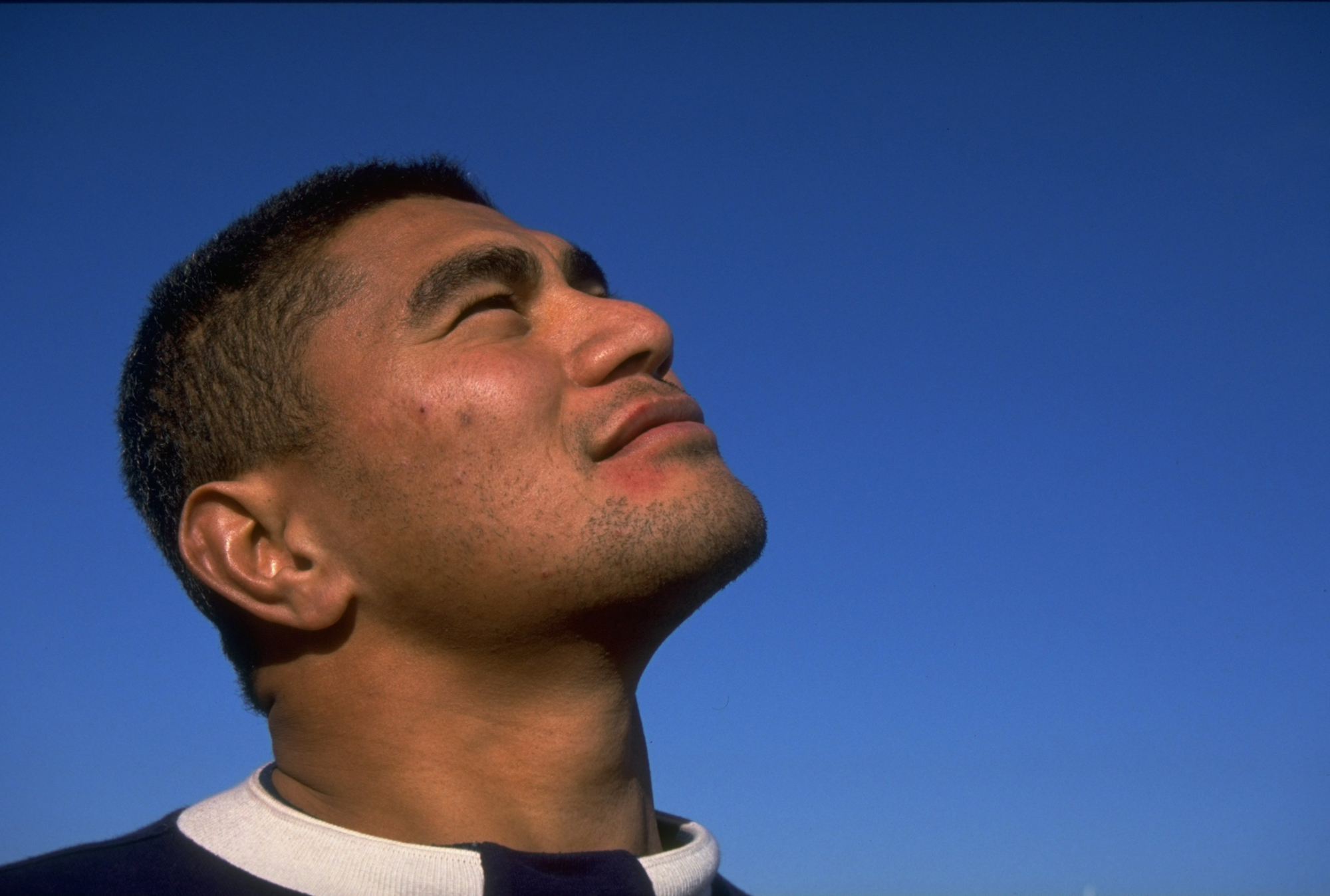
Tuigamala started all three Tests for the All Blacks during the British & Irish Lions’ 1993 tour of New Zealand (Dave Rogers/Allsport)
Man of God
It was around the time that he was sprinting away from flying crockery that he first discovered religion, and made a ‘pact’ with God to serve him throughout his life.
“I became a Christian at 15 and all hell broke loose. My friends – many of whom were drinkers, smokers and druggies – despised me, they hated and were disgusted with me, but I soon learnt who my real friends were.
“There were people who said I would never enjoy life to the full but I think I have proven them wrong through what I’ve achieved. More than anything I know that I have actually gained so much more in life through having my relationship with God, and that’s something that no one can take away from me.
“In the years that have progressed, I have come to understand who my real friends really are. My mum always advised me that I will know who my real friends are because they will be the ones who will come up and tell me my mistakes.
“When I came back from the All Blacks tour aged 18, I thought I was ‘it’. It took this friend of mine to come up and say: ‘Inga, you’re such a big-head. You’ve lost your way, I’m saying this because I care about you, and I care about our friendship.’
“l’ll never forget that because it hurt me, and it hurt my pride. But that friend now is my best friend, and we’ve been friends since we were five.
“My one wish for the future is to be more humble – because I can get carried away, and I can get big-headed. It’s difficult when you’ve got the world at your feet not to get caught up in it all, and start actually believing all the hype. I need to be more humble – everyone does.”
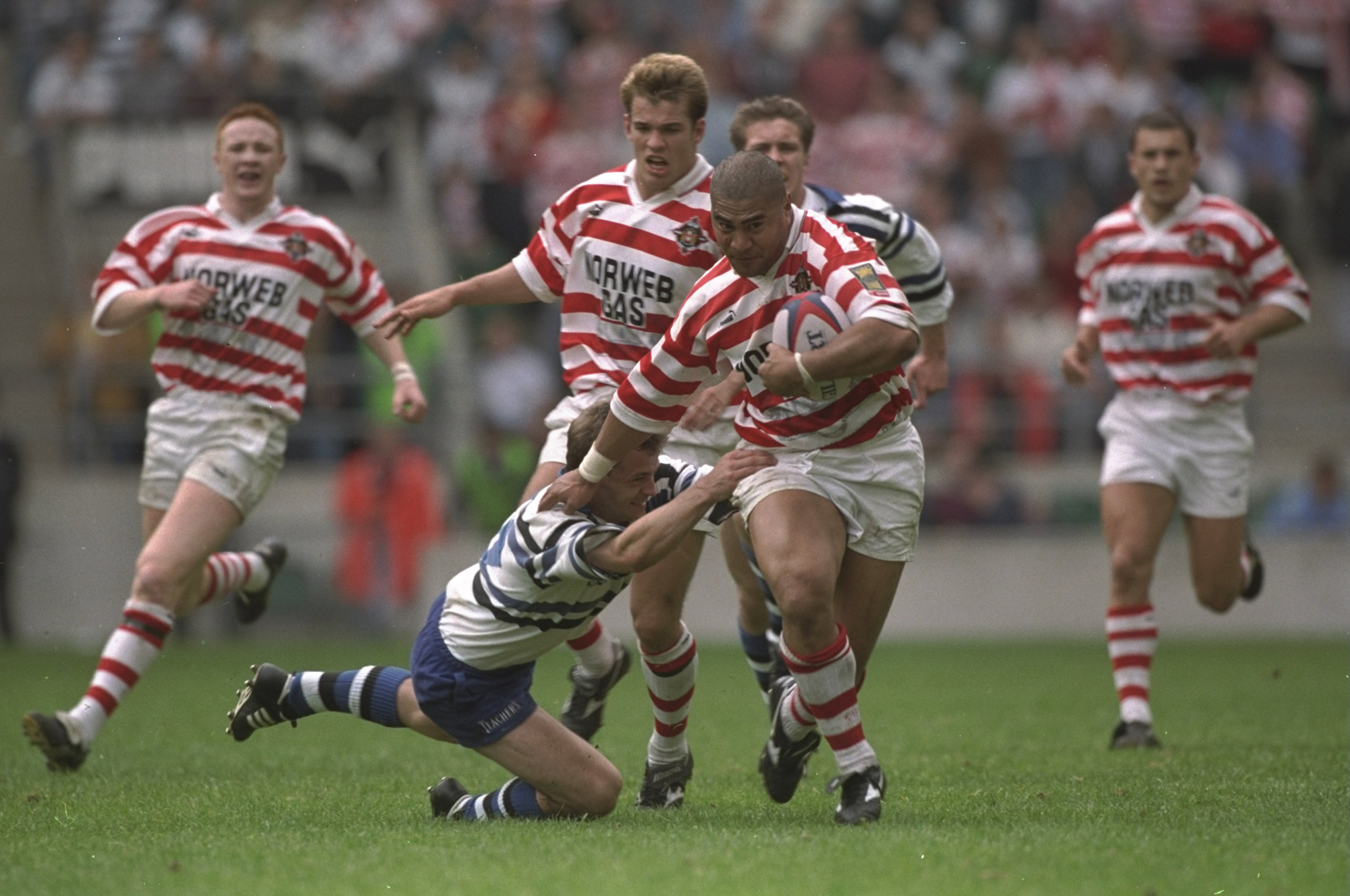
Tuigamala was part of the all-conquering Wigan rugby league side of the mid-’90s (Mike Hewitt/Allsport)
Questions of faith
Inga’s devotion to his religion would appear, in many ways, to fly forcefully in the face of the tough conflicts that he faces on the pitch. The man-against-man battle for physical supremacy and the need to bend the laws at the highest levels in the name of victory. How does a man effused with Christian feelings and the equality of mankind cope with the dilemma of having to be the best on the pitch?
“There’s no conflict. I go out there with an objective and I’m absolutely focused. In the Bible it says: ‘My peace, I give to you, My peace that surpasses all understanding. My peace I give unto you.’
“I know that I have a peace that no one can take away from me. When someone has a go at me, naturally I want to retaliate and to fight back, but I’ve learnt a good lesson about being
peaceful and faithful.
“I ask myself, why are we here on the pitch? Not just to throw our weight around and show how tough we are, anyone can do that, anyone at all.
“l know physically that if I was to lose my temper I could really hurt someone, but what does that prove? That’s no personal challenge, that’s just doing the easy thing. I’m not here for that reason.”
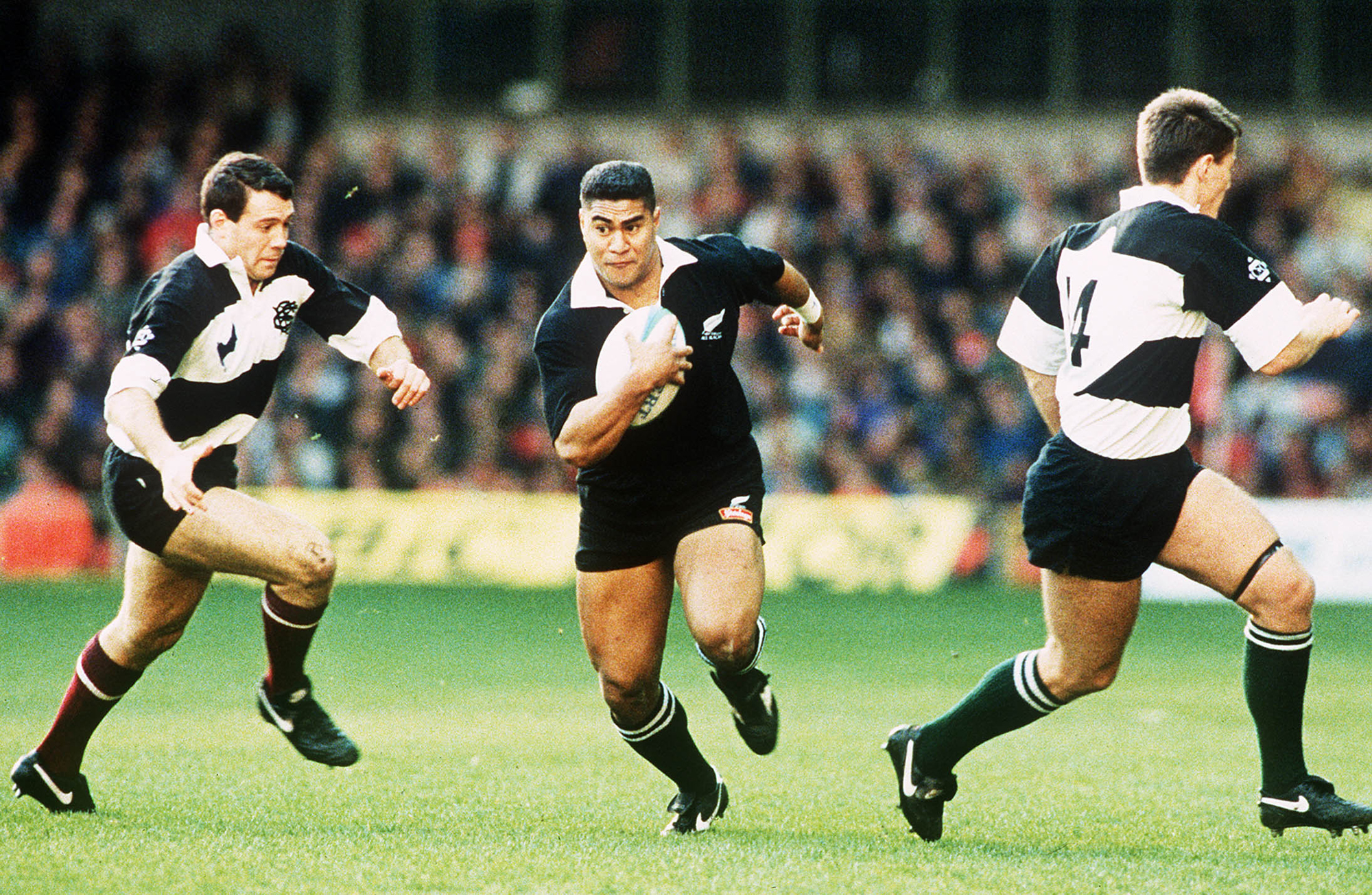
Tuigamala won 19 caps for the All Blacks before crossing codes to play rugby league (Ross Land/Getty Images)
The million-pound question
Clearly no dilemma there, then. But what of the dilemma of taking an extraordinarily large amount of money out of a sport you love?
“The money issue is so overplayed – I was keen to get back into rugby union, and in order for me to leave my contract with Wigan, and my contract with the Super League, Sir John Hall had to pay a lot of money,” he explains.
“I always believed that I was going to end up back in rugby union when my career in rugby league had finished but I didn’t expect it so soon – it was like a gift, a lifeline to come back to rugby union quickly. Rugby league has offered me a great deal, I have learnt as a sports person and a player that there’s so much you are capable of if you have the self-belief.
“You can’t take anything away from both codes because they are unique,” he adds. “I don’t think or hope that they will become one game because the supporters of both codes are staunch and there would be riots all over the place if they tried to change them. The sports have survived for 100 years, and it would be a real shame if they changed now.”
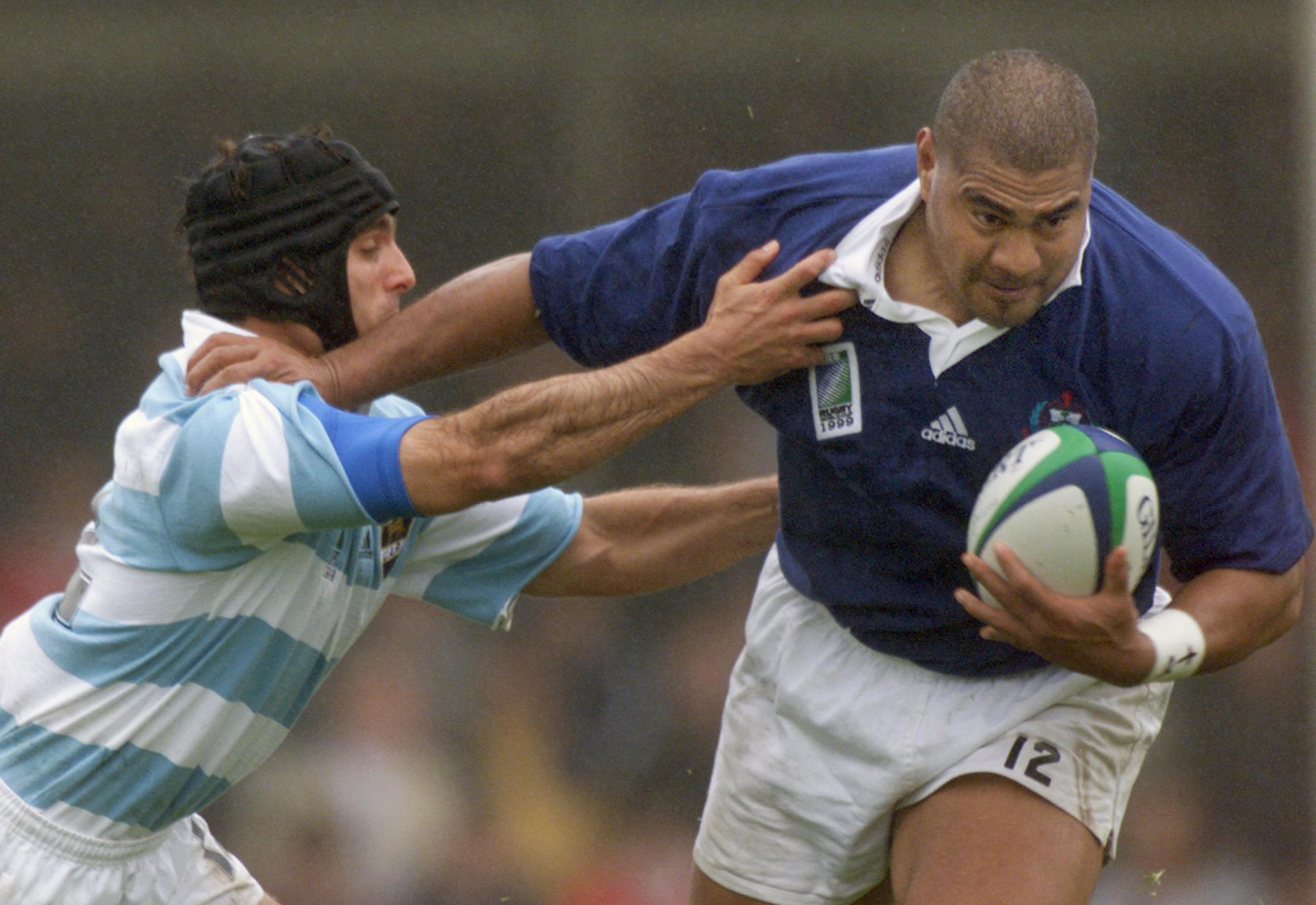
After his return to rugby union, Tuigamala represented Samoa, the country of his birth (PATRICK KOVARIK/AFP via Getty Images)
A rich future?
If both sports are to continue successfully into the next millennium, then surely rugby union cannot continue to spend the sort of sums that it is spending at the moment. There has to be a point at which it settles down, and perhaps then we will see a downside to the professional era.
“It’s hard to tell. We don’t know how far professionalism will push the game of rugby. Clubs are definitely going to have to be very careful with their budgets. Newcastle have spent a lot of money on players and they have to make sure they get something in return. As long as clubs are run like businesses, but with honesty, then I’m sure that everything will be OK.”
“Inga was the first. He won’t be the last”
How Rugby World columnist Mick Cleary saw Tuigamala’s much-talked about move back in 1997
A stroke of genius? Or a burst of ego-prompted madness? Just how much is Va’aiga Tuigamala worth? The answer is just whatever the hell someone is prepared to pay for him. This is called the free market, the high temple of Conservative thinking for many years. One of their ilk, Newcastle’s Sir John Hall, thinks Inga was worth the best part of £1 million. So he paid it. Simple. Deal done.
There should be no agonising about this. There should be no whinging about what the proper market value should be. If Duncan Leopold, chief executive of London Irish, thinks it’s “Looney-Tunes money” then fair enough. He’s probably right.
The thing is, though, it’s not his Looney Tunes money. Tony Swift, now the main man at Bath, claims that Sir John “doubled the going rate for a player overnight”. And so he did. The Newcastle chequebook was first to flash last year when its siren flutterings lured Rob Andrew north.
But there is no alternative. If you want professionalism then you have to take it, warts (otherwise known as agents), overdrafts and all. Some clubs have more money than others. A lot more, in fact. But that will guarantee them success. Blackburn Rovers managed it in soccer for one year only. This season they’ve been down among the dead men of the Premiership. Consider too how the street urchins of Wimbledon have managed to prosper for more than a decade. Money can bring comfort, hope and security but nothing else.
Rugby is a more complex sport than soccer. There are far more component parts to be fine tuned. There are therefore more component parts which can break down, so leaving our big-name signing stranded. Crucially, for all the science and preparation a rugby team still needs heart and passion. When the going gets tough the players need to believe absolutely in each other. Just because the bank balance of a club is healthy does not mean that its soul is.

Newcastle Falcons mark their former star’s passing in February 2022 (Nigel Roddis/Getty Images)
The poorer country cousins will survive. Just as my own paper, The Observer, manages to find a niche and compete in its own way with [the now-defunct] The News of the World which outsells us tenfold every Sunday, so Gloucester will learn to live with the high-rollers at Saracens and Wasps. The old market place was never equal anyway. How many years were Orrell turned down for a fixture by the likes of Harlequins? Snobbery was more divisive and unseemly than money ever threatens to be. At least the chequebook is up front and more honest.
There will be no direct return on Inga’s transfer. With only a few thousand through the turnstiles at Newcastle the great Samoan will be an OAP before he gets anywhere near repaying the money invested in him.
It doesn’t matter a jot. Sir John Hall has deep enough pockets to make speculative punts. If it doesn’t work, if Newcastle don’t make the first division and Europe, and if pay-per-view TV doesn’t take off for rugby, then Hall will write it all off. Other clubs will not be so lucky. There’s little doubt that several of them have over-reached their budgets, if, in fact, they had anything as planned as a budget in the first place. Some clubs are living so far apart from their means that they’ll soon be in the divorce courts.
In Wales, in particular, the wall is moving ever closer to some clubs. In England, expect to see a huge down-sizing of squads this summer. Many players will have their contracts ripped up. The clubs should honour commitments but I doubt that they will. It’s wrong but there is nothing to fear in all this.
There is no need to be righteous. Clubs will find their own levels in the leagues and in the transfer market. What we are seeing are the birth pains of professionalism. There should be no panic rush into salary capping or transfer restraints. As Leicester’s Peter Wheeler remarked: “We had salary capping before – it was called amateurism.”
It didn’t work then and it won’t work now. There’s no turning back. Inga was the first. He won’t be the last.
Download the digital edition of Rugby World straight to your tablet or subscribe to the print edition to get the magazine delivered to your door.