





Red Roses legend Nolli Waterman remembers the last time England were on top of the rugby world
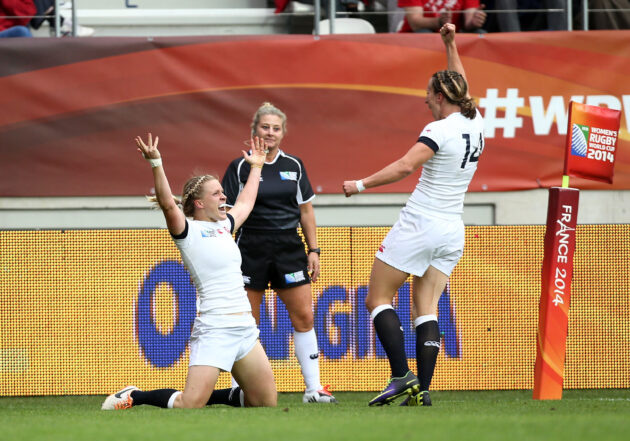
Final Score: England 21-9 Canada
“I dropped to my knees at the final whistle,” says Nolli Waterman.
“It was a massive relief because we knew the game needed a northern hemisphere team that was being provided with resources to win for there to be a turning point in the game.”
The pressure on the Red Roses this year to win a home World Cup is undeniable but as Waterman tells Rugby World, it is no first. Women’s rugby in England has had expectations set upon its shoulders many times before.
In 2010, 2017 and 2022, the expectations to win the World Cup were sky-high. To help transform and revolutionise the game. To inspire the next generation.
On all three occasions it was close but no cigar, a trio of final defeats to the Black Ferns acting as a black-spot disease to the Red Roses’ World Cup dream. The same expectations were bestowed upon the class of 2014. With the tournament across the Channel in France, England were yet again a two-horse favourite alongside their ultimate adversaries, New Zealand.
Having lost at home at the Twickenham Stoop in the 2010 final, Waterman has experienced what life is like when you lose. While the fanfare and attention was adorned on the team prior to the tournament, it was remarkably absent after England failed to get over the line in the final, save for a big team night out in Guildford.
Now or never
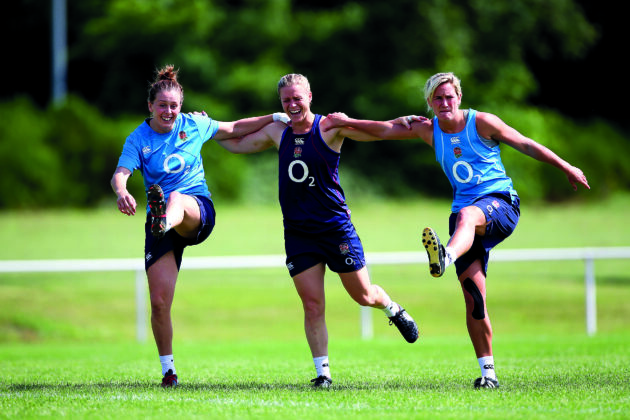
Natasha Brennan (L), Danielle Waterman (C) and Claire Allan (R) warm up during an England Training Session during the IRB Women’s Rugby World Cup 2014. (Photo by Jordan Mansfield/Getty Images)
By the 2014 final, there was a feeling of now or never for the Red Roses’ hopes. Support from the women’s game had been on the rise, financially and resource-wise, which had been returned with consistent performances from Gary Street’s team.
But as Waterman realised, it was only silverware that could really move the needle.
“I became a Red Rose at 18 when I was still at school and I had some of the most incredible ‘professional’ athletes who weren’t getting paid showing me the ropes and setting the standard for what it meant to wear that shirt,” explains Waterman.
“So 11 years after my first cap, being able to say I’d done it and won the World Cup was crazy. The impact we had on the wider game was real. When we got back to Twickenham, the RFU staff did a guard of honour for us. We went into one of the hospitality rooms and it’s full of press – it was amazing. I did an interview with Jon Snow on Channel 4. We went on Soccer AM with our medals. The impact was huge and you could feel the impact.
“I don’t think we have really appreciated what we achieved. There is plenty said, and rightfully so, about the pioneers of the game in the early 1990s who helped set the game up and created a World Cup. But I think we were the turning point between amateurism to professionalism. People took secondments from their jobs to be there. Claire Purdy left her job in insurance so she could focus on this goal.
“I remember going to a camp before the World Cup with England in Hull. Sophie Hemming, a prop in the squad, rocks up looking exhausted. I asked if she was okay and she’d been in Bristol helping a calf at a local farm because she was a full-time vet. She’d gone to help this farmer with their livestock overnight, driven to Hull and then just joined a World Cup preparation camp and had to get on with it. “When people ask what the difference between winning and losing can have in terms of impact, women’s rugby in England, the only thing we can do is win. If the men lose in a final it’s still amazing, but for us it is never good enough.”
A will and a way
Eleven years on from England’s second World Cup win, most of the squad in search of a third title will have grown up watching the likes of Waterman, Katy Daley-Mclean and Maggie Alphonsi lifting the trophy and identified that moment as what inspired them to pursue that same goal in their own careers.
A handful of those in the current squad were there that day. Alex Matthews, Marlie Packer, Mo Hunt and Emily Scarratt will all carry the experience of 2014 into this year’s tournament, warts and all.
As Waterman reminds us, with any World Cup campaign there are bumps in the road.
“When we played Canada in the pool, I remember one of the things that the Red Roses has always had is a world-class set-piece with a world-class front row that absolutely dominates,” she says.
“In the first couple of scrums of that game, I saw Maggie (Alphonsi) wasn’t getting to the ten and I knew something was wrong. In most Test matches, I was making a maximum of two or three tackles a game because I had a wonderful defence in front of me. In that game, I had five to six tackles to make and I knew something was up.”
It created a real nailbiter that saw the game tied at 13-all following a late Magali Harvey penalty that levelled matters after Sarah Hunter’s earlier score.
Related: All you need to know about the 2025 Women’s Rugby World Cup
The immediate reaction for the 15 players on the pitch was to look for a way to win the game. Both teams were level on points in the group stage until this point and England wanted to find a way of ensuring they finished top ahead of the knockout stage.
However, during a break in play, the team goal shifted when it became apparent that a draw could be fatal for the Red Roses’ oldest adversary, the Black Ferns.
“Before the end of that game, a message came on saying ‘just keep the ball, a draw is enough’. At no point had we considered what would happen if we drew. We almost lost the game before that when they scored a try that got pulled back for a knock-on. That moment made us all realise we could lose that World Cup. We didn’t plan that draw to knock New Zealand out, we made something like 240 tackles in that game. We just did enough to keep going in that tournament.”
For the Red Roses, it was uncharted territory. With no Black Ferns to deal with, England strode into the semi-finals to take on Ireland, the 2013 Six Nations champions who had stunned New Zealand in the pools. It could have been a big banana skin but England wiped the floor with Ireland, 40-7.
“The best England performance that I’d ever been a part of,” says Waterman. In the final it was Canada again who stood in their way.
“The final, the first scrum, the girls smashed it through,” says Waterman. “Graham Smith, phenomenal set-piece coach, worked on those issues from the group stages and we tore into Canada. Maggie flew off that scrum and I thought, ‘here we go, we’re back.’ We knew at that moment it was going to be okay. Waterman crossed for a try in the first half, Scarratt followed suit in the second.
“After Emily scored, we knew we were going to win. Actually, we knew we were going to win at 11-9 up. Magali Harvey was kicking really well for Canada, the strangest technique but it worked. After she kicked that third penalty [to reduce England’s lead to 11-9], I looked across and gave a big thumbs up to the bench knowing we had it in our grasp.
“Which was the total opposite to people watching at home or in the stands. They were talking about how nerve-wracking it was. On the field we felt calm. I watched the game back during Covid and it’s only then I realised how bad we were at times, not connecting. Me and Emily Scarratt fluffed some moves.”
Top of the world
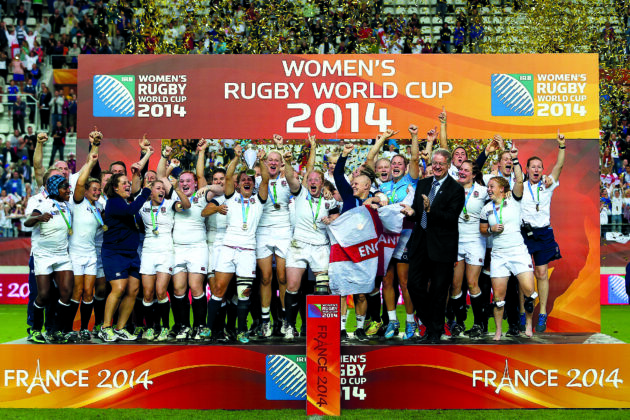
England celebrate after winning the IRB Women’s Rugby World Cup 2014 Final. (Photo by Jordan Mansfield/Getty Images)
A win is a win and England had done enough to bag a second world title, 20 years after their first. With it came a wave of emotion for all those involved.
The sacrifice, the expectations, the pressure all lifted as they realised they had achieved what they had set out to do. Waterman collected her medal standing next to Matthews, that year’s baby of the squad at just 20.
Waterman was teaching Matthews at Hartpury College in 2010. She was in her second year of studying when Waterman had lost the final to New Zealand at The Stoop.
Related: The Red Roses’ fixtures for the 2025 Women’s World Cup
Now they stood side by side being presented with winners’ medals, an emotional moment for them both.
“We drove back to Paris in a bus, looking for the pub where all our friends and family could be,” Waterman recalls.
“We were on a roundabout and noticed some of our family were there, so asked the bus driver to stop. We got out and walked into a bar and all of our friends, family, past players were there with their signs and World Cup cutouts.
“The biggest support network we all had, all singing Swing Low as we took the actual World Cup into this random French pub. That was such a special moment, celebrating what we had achieved altogether. Handing around the cup so that everyone could get a photo with family members. Those people were critical to us as athletes. They see the blood, sweat and tears and pick up the pieces when it goes wrong. It felt like we gave them the medal.”
After that came the Soccer AM appearance, chatting to Jon Snow and being named Sports Personality Team of the Year, the recognition that the class of 2014 had rightfully earned.
Download the digital edition of Rugby World straight to your tablet or subscribe to the print edition to get the magazine delivered to your door.