





With Welsh rugby potentially dropping from four regions to two and Newcastle being renamed after Red Bull, identity in rugby is remaining fluid as ever

‘Identity’ is a word that you see used a lot in rugby.
We’re not talking about gender and sex etc when we refer to identity in this column, but more the relationship between supporters and their clubs/test teams and vice versa.
Identity has become a big word in rugby over recent seasons and none more so than the summer months of 2025.
Can a change of identity be a good thing?
The first being Newcastle Falcons’ takeover by Red Bull, and the other being the restructuring of the problem child of European club rugby, Wales.
Firstly, let’s deal with Newcastle. They were rescued by Red Bull and have been given a lifeline rarely seen in pro rugby.
A club that was recently regarded as the next English pro team to fall through the trap door has instead taken that trap door, added another, and turned them into a set of gorgeous patio doors from which to relax on pro rugby’s veranda.
Red Bull’s takeover of Newcastle has been awesome for the game, and the author of this column is genuinely chuffed for those involved. But not everyone felt the same.
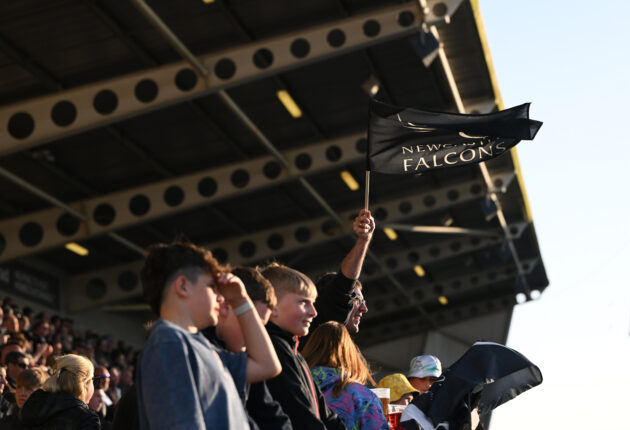
Newcastle Falcons will become Newcastle Red Bulls this season. (Photo by Stu Forster/Getty Images)
As soon as it was announced that their name was going to change from the Newcastle Falcons to the Newcastle Red Bulls, then out came rugby’s ‘gate keepers’ on social media lambasting Newcastle for altering their identity and bowing down to the global rugby industrial complex.
But let’s face it, Newcastle Falcons were named that in 1996, not 1896 – it’s not as though Queen Victoria was there to cut the ribbon on the opening day.
Also, it’s not exactly like Newcastle is renowned for its falcons. As far as I am aware David Attenborough has never done a one hour special on Falconidae based in the Northeast – but if he has DM me on @thepaulwilliams on X.
It’s the same issue with the naming of rugby stadia. As soon as a sponsor takes over the naming of a stadium, some supporters react as if those same sponsors have also demanded that all supporters change the name of their first-born children to match.
Remember the fuss when Twickenham was renamed the Allianz stadium? “No Claims Bonus, your tea is ready!”.
Read more: How to watch the Women’s World Cup anywhere in the world
The identity of Welsh rugby
Then there’s the far more complicated restructuring issue in Welsh rugby, where the pro game simply doesn’t have the money for four teams, nor the population – if South Africa only has four teams, how can Wales possibly resource the same?
The desired outcome (from the WRU) is that four regions become two – with Cardiff and Dragons becoming an ‘East Region’ and Scarlets and the Ospreys becoming the ‘West Region’.
Now, let’s not underplay how big a decision this is for Welsh rugby. Even in a rugby nation that regularly lurches from one rugby disaster to the next, this’ll make the fall of Rome look like pigeons fighting over a Pepperami.
Yet as tumultuous as the restructuring will be, to see some supporters on social media say that they wouldn’t support either the East or West teams, due to not ‘identifying’ with them does seem a bit like overkill.
Some supporters have even stated that they would stop supporting pro Welsh rugby entirely and would rather support a team in Bristol or Gloucester, which seems like the complete opposite of ‘identity and affinity’ if you’re Welsh.
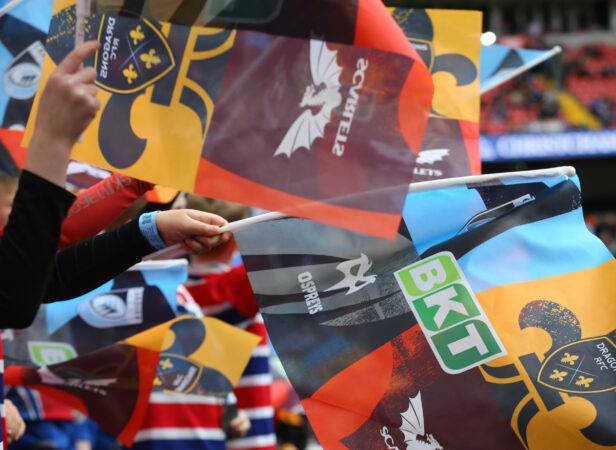
The WRU is considering dropping from four to two regions (Getty Images)
If two of the individual regions remained as individual entities, then yes it would be understandable that the remaining two sets of supporters would flee.
Dragons supporters aren’t going to support Cardiff, and the same situation would arise in the West between the Ospreys and the Scarlets.
But that isn’t what’s being discussed as the desired outcome from the WRU. East and West teams would offer no advantage to any of the regions, historic or future, and if anything could possibly unify the mess that was the initial regional carve-up in the first place.
This focus on ‘identity and affinity’ is a particularly weird stance from supporters in Wales given how much overlap there is between all forms of rugby in Wales – and life in general.
At its most basic level, in some areas of South Wales there are four local rugby teams within three miles of each other – yet those villages share the same doctor’s surgery, chemist and supermarket.
It seems weird to have such a micro attitude to identity when virtually all of us in South Wales live on top of each other on a tract of land which is smaller than a cattle ranch in Texas.
This ‘local identity’ is even weirder when you consider that some youngsters in Wales play for the same school team yet may be split between playing for four totally separate local clubs – within a four-mile area of that school.
It happened to the author of this column, where we all played for Gowerton School’s First XV, yet played our club rugby at either Gowerton RFC, Penclawdd RFC, Dunvant RFC or Waunarlwydd RFC.
Read more: How to watch the Rugby Championship
Where does the line of ‘identity’ begin and end between club rugby and school rugby? Why can we share a school, but not a club?
This dichotomous issue can also be seen at test level in Welsh rugby, where many are totally okay with bringing in a player from 5,000 miles away on residency (something the author of this column supports), yet those same people will vomit if you ask them to support a new rugby entity six miles from where they live now.
The issue of ‘identity’ and ‘affinity’ at an amateur rugby level is easier to understand than at the pro level.
Many local clubs are more than simply rugby teams – they are pubs, community centres etc. And whilst their role in the centre of communities has arguably diminished over the past 30 years, it’s hard to ignore those cultural ties.
But at the level of pro rugby, the only thing that matters is winning – and that means money. Pro rugby is different. It’s set up to win and provide a product that is commercially viable, or nearly commercially viable.
Not everyone has a right to have pro sport in their town, city or village – look at the USA for example, they often have one pro team per state. Yet some in Wales still want four professional rugby teams within a total of 63 miles of each other – or they’ll walk away from the game entirely.
For a sport that supposedly welcomes all shapes and sizes on the field, off the field things are very different.
When it comes to rugby ‘identity and affinity’ the message seems to be, if it isn’t exactly the shape and size for me, then you can stick it.
Download the digital edition of Rugby World straight to your tablet or subscribe to the print edition to get the magazine delivered to your door.