




If football and cricket can do it on the day, why do rugby side have to lock down their line-ups so early?
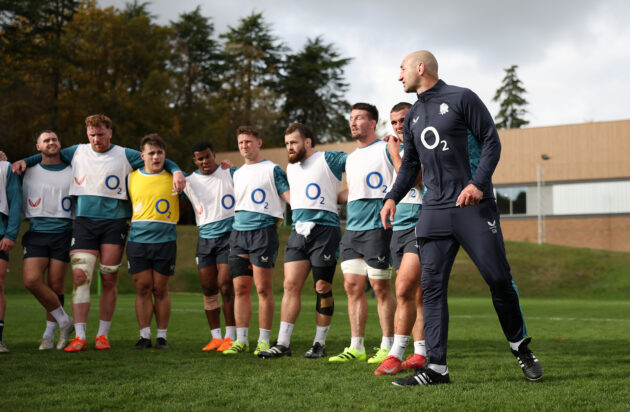
It’s a long-standing oddity of rugby union. While football and cricket teams are announced mere hours – or even minutes – before a game gets underway, rugby coaches have to reveal their hands days in advance.
It’s great news for fans who want to know who’ll be playing at the weekend, while giving team management a small snapshot of what to expect from the opposition – for better and worse.
But why is rugby such an outlier in the world of team sport? Below we explain some of the rules and the reasons behind the game’s long-standing conventions on team announcements.
When do rugby teams usually announce their line-ups?
Rugby teams are traditionally announced well in advance of kick-off.
In the Six Nations, Autumn Nations Series, the Rugby World Cup and other World Rugby-sanctioned tournaments, head coaches are generally required to submit the names of their 15 starting players and eight replacements at least 48 hours before a match gets underway.
There is, of course, nothing to stop them revealing their hands even earlier – Rassie Erasmus, Steve Borthwick and Warren Gatland have all been known to announce their plans three or four days ahead of kick-off, often as a display of confidence to the opposition.
For example, Steve Borthwick announced his England team to face New Zealand in the Autumn Tests on the Tuesday ahead of the Saturday game.
Read more: How to watch the upcoming Autumn Nations Tests
The 48-hour rule does not apply to every competition, however. In the European Champions Cup and Challenge Cup, for example, line-ups are not required until midday (UK time) on the day before a match – so 12.00pm on the Friday before a Saturday fixture.
Also, if both teams agree, announcements can be delayed until up to 12 hours before kick-off, though this exemption is rarely brought into play.
Even then, there is some wriggle room. In exceptional circumstances – say, a player getting injured in the warm-up – they can be replaced with another player from the squad.
How does this compare to other sports?
In this regard, rugby is definitely the outlier among team sports. Premier League football clubs don’t have to announce their line-ups until 75 minutes before kick-off – it was previously 60 minutes, until they came into line with European competitions last season.
Cricket sides, meanwhile, can delay until the all-important toss, allowing them to take the weather and condition of the pitch on the day into consideration.
Coaches in basketball, hockey, netball and several other sports can also keep their line-ups close to their chests until the day of a match.
So why do rugby teams announce their sides so early?
It’s probably a throwback to the amateur era, when squads were smaller, substitutes were only brought on in the event of injury, and players might have to book time off work – it’s clearly better to tell your boss “I will be playing on Saturday” than ”I might be in the team but the coach hasn’t confirmed yet”.
Early team announcements in rugby are arguably less advantageous to opposition teams than in, say, football, where formations can vary dramatically, and a particular selection might offer too many clues about Pep Guardiola or Mikel Arteta’s tactical plans.
Indeed, rugby’s rigid eight forwards/seven backs structure means that the biggest question about the composition of a team is generally whether the coach will opt for a 5-3, 6-2 or 7-1 split on the bench.
Even so, the early announcement may have become an anachronism in an era of professionalism and 23-player gameplans. Maybe it would be better for all concerned if a head coach could select the best fly-half to play the weather conditions on the day?
Though, of course, without selections to debate, fans would have rather less to talk about in the run-up to a match.
Download the digital edition of Rugby World straight to your tablet or subscribe to the print edition to get the magazine delivered to your door.