




The former Italian captain has the most Six Nations appearances of all-time but no title to his name
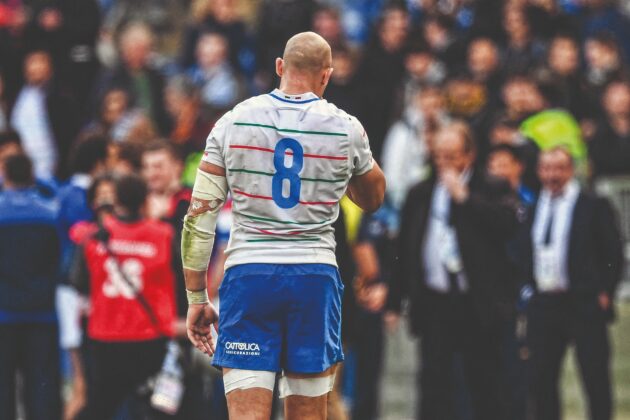
No man has made more Six Nations appearances than Sergio Parisse’s 69. The endlessly dextrous and durable No 8 captained his country to some of their greatest-ever wins – including against France in 2011 and 2013, the latter the same year in which they also beat Ireland. Parisse also skippered them to their first two tournament away successes, both at Murrayfield, in 2007 and 2015.
A two-time Top 14 champion with a couple of European Challenge Cups to his name, the now 42-year-old lineout coach at Toulon was the first Italian player to be inducted into World Rugby’s Hall of Fame in 2024. Perhaps the true measure of Parisse’s greatness, however, lies not in the names and numbers up on the honours’ boards but in how the inspirational back-rower was able to keep his own standards relentlessly high.
Read more:Italy’s wild early beginnings according to an England legend
So underwhelming were the Azzurri for much of his near two decades in the shirt that Parisse often resembled a pearl being displayed in a puddle. When Greig Laidlaw knocked over a 78th-minute penalty for Scotland at the Stadio Olimpico in 2018, Parisse became the first player to lose 100 Tests.
That was outing 134 of an eventual 142, and he doesn’t seek to gloss over the fact that there were some dark days, indeed more than a few pitch-black ones.
Sergio Parisse: “I don’t like to lose”
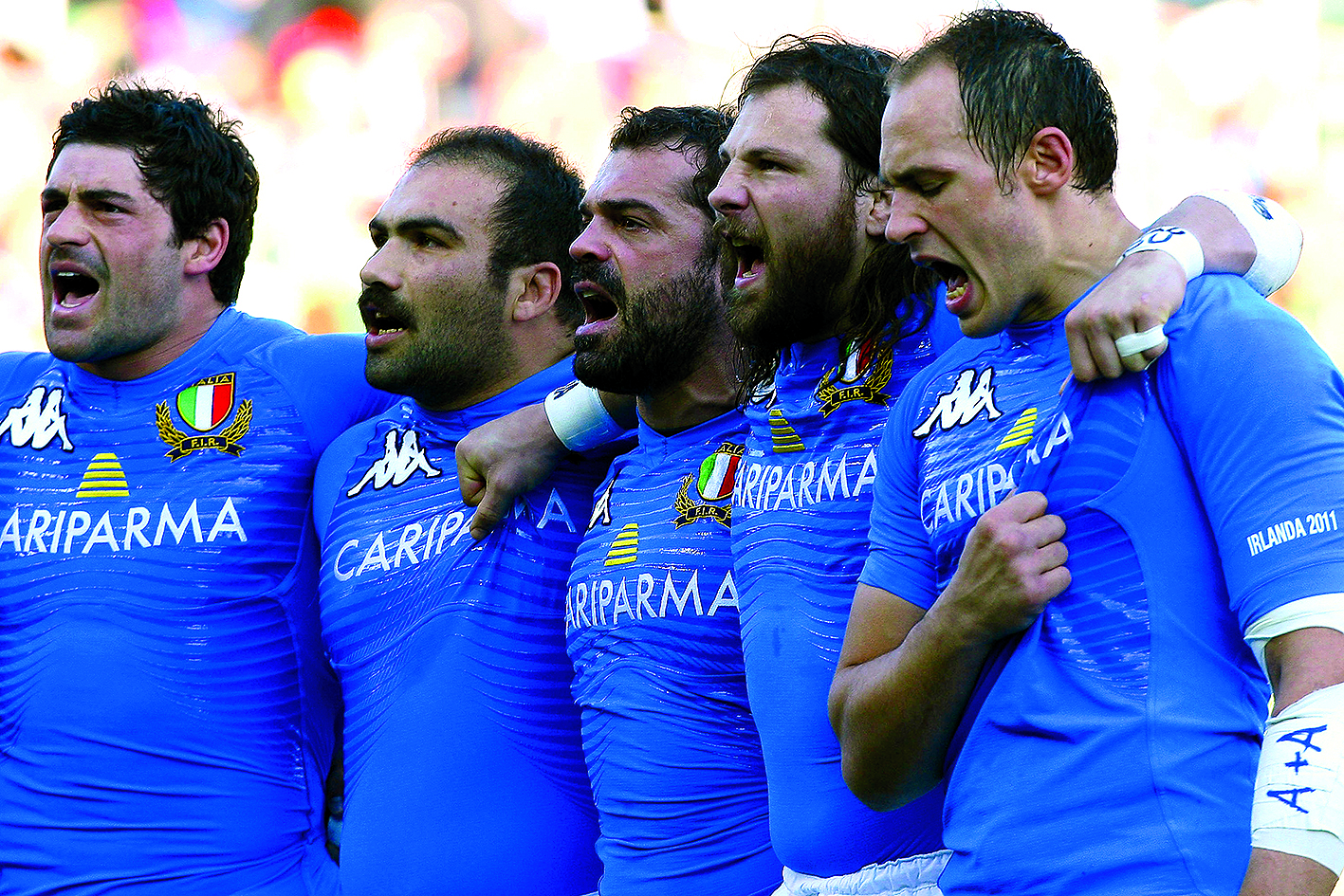
Sergio Parisse (R) of Italy sings the national anthem with his team (Getty Images)
You would require no more than the fingers of one hand to tot up the number of times when Parisse was anything other than a shining light; a beacon of hope which showed the way for careworn team-mates and supporters. “It wasn’t easy, it was really very difficult because personally I am a competitor and I don’t like to lose,” he says.
“As a captain, it was a great responsibility; it was difficult but at the same time it was always a challenge for me. Every time I lost, as a captain it was important for me to never give up and to show the team that we could go again.
“I never lived these setbacks as a victim but rather as an opportunity to improve. This was always my driving force as a captain.
“My role was to provide the example through my energy, my positive body language, giving everything on the pitch and being a leader. I could never ask the players to play and have high standards if I was not the first to have these standards myself.
“At the same time, there is no doubt that for Italy, the Six Nations has tended to be extremely complicated, with small moments of happiness and victories along the way.”
Read more: How France have mastered professional rugby
‘2007 win against Scotland will never be repeated in history’
Indeed, when Ange Capuozzo went on that solo run in Cardiff four years ago to set up Edoardo Padovani for a 79th-minute winning try, it ended a tournament record 36-game losing streak. Their most recent previous success had come in Edinburgh seven years earlier, a game which had itself ended an eight-year wait for a win on the road.
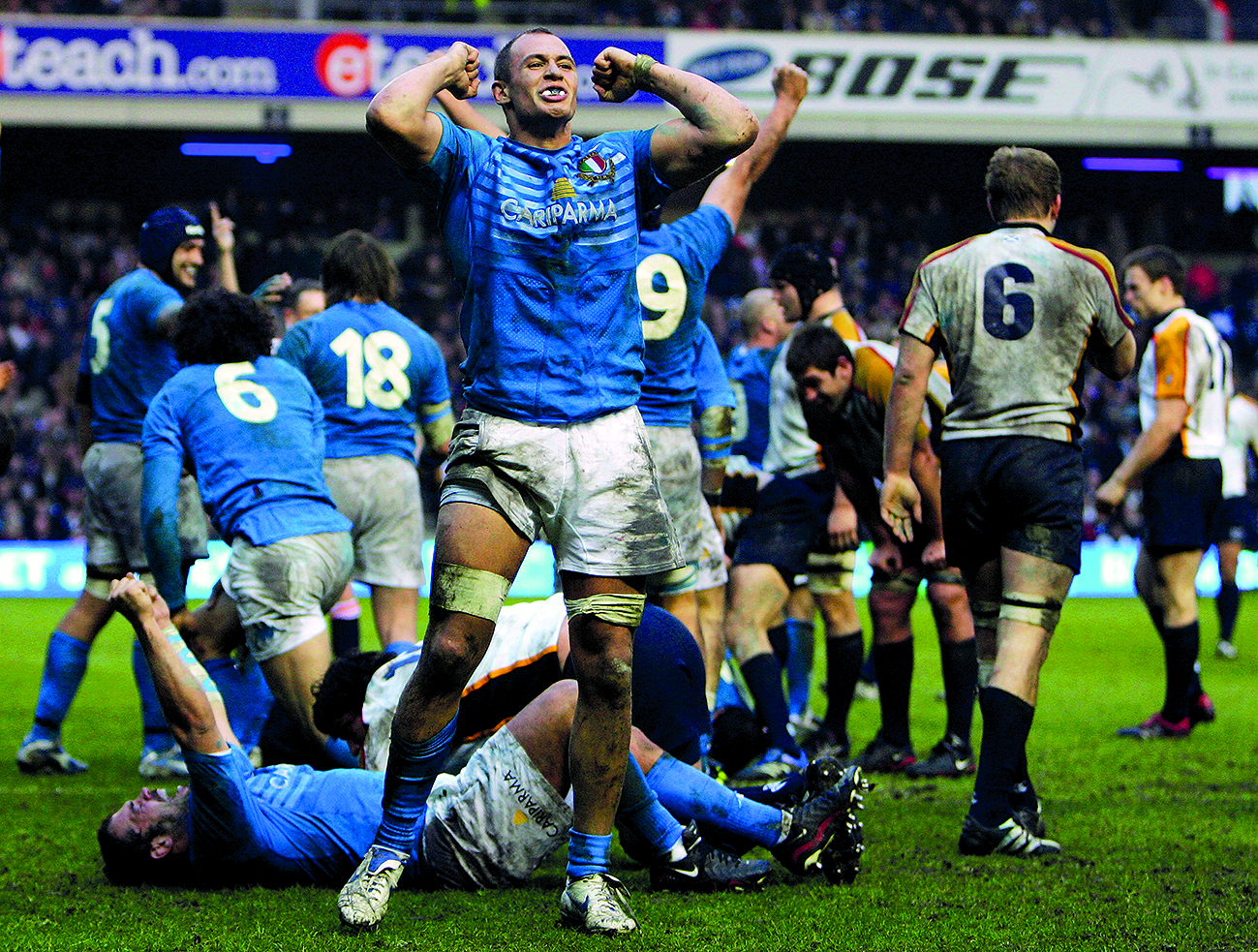
Sergio Parisse of Italy and his team mates celebrate at the final whistle (Getty Images)
“Those two Scotland wins in 2007 and 2015 were huge for us, but you couldn’t imagine two more different games,” Parisse says. “The first was one that will never be repeated in history. To score three tries in the first seven minutes (from Mauro Bergamasco, Andrea Scanavacca and Kaine Robertson) was just incredible.
“I remember looking up at the Murrayfield scoreboard and not being able to believe my eyes. We were not used to being so far in front anywhere, never mind away from home in one of the world’s most famous stadiums.
“It was unreal, a truly historic victory (37-17). Eight years later it was a totally different game because we were down on the scoreboard and had to hang in there right till the end.
“Scotland had a five-metre scrum and won a penalty. All their players were celebrating, but when they kicked to touch (through Peter Horne) the ball stayed in. We counter-attacked, pushed and pushed (through a driving maul) and were awarded the penalty try.
“To be credible, you have to win games and you have to be able to show that you are competitive. We had this big hole between 2015 and 2022 without victories and obviously when you don’t win for many years, it’s right that people talk about your place in the Six Nations.
“The wins that have come since, against Wales in Cardiff and twice at home against Scotland (in 2024 and 2026) have helped us gain a lot of credibility and above all they have asserted Italy’s position in the tournament. I believe that in the last three or four years, it has become much more consolidated.”
Read more: Rugby great: Sergio Parisse
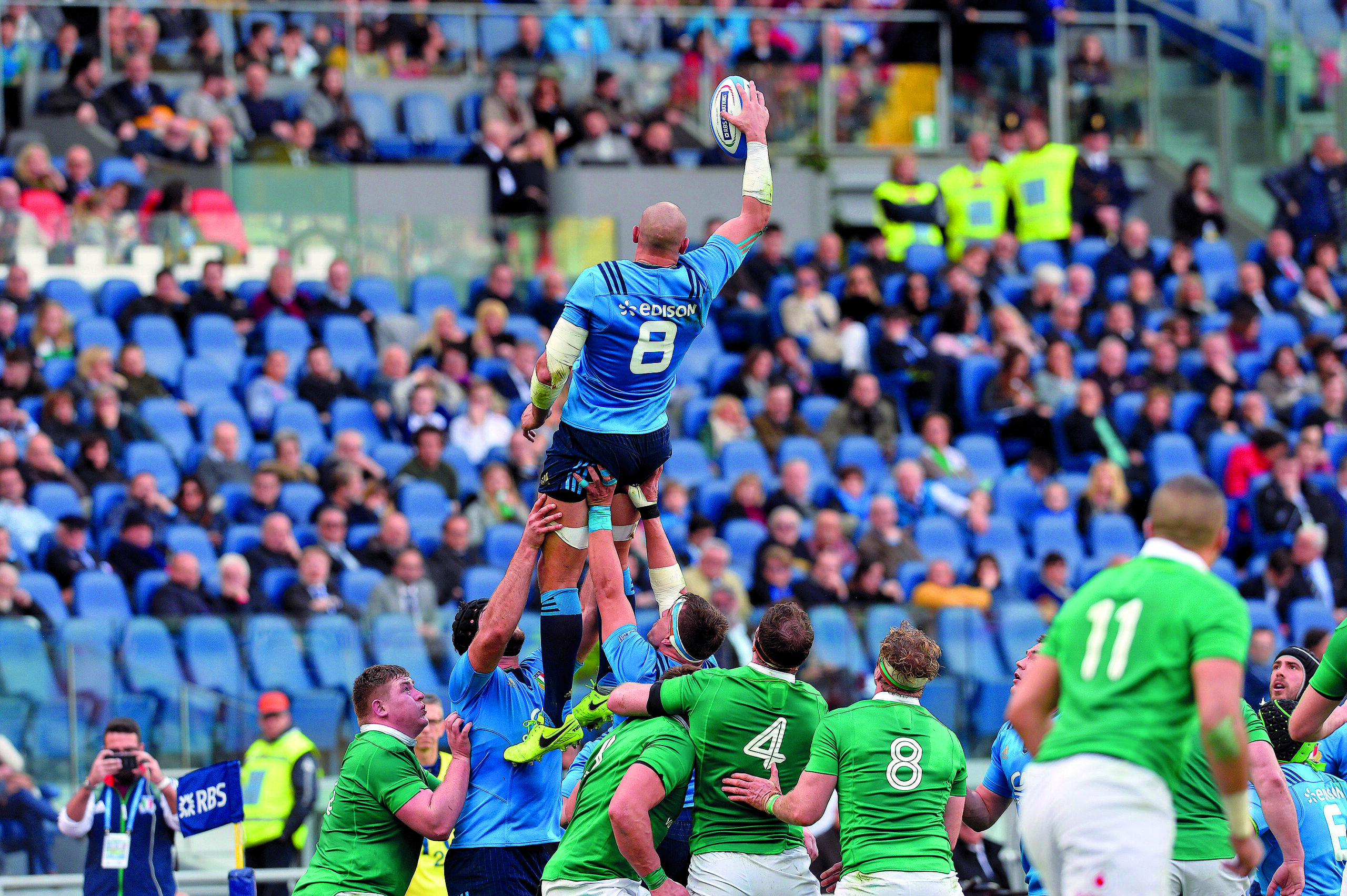
Sergio Parisse during the RBS Six Nations match between Italy and Ireland (Getty Images)
Parisse’s rugby history
Five nations had only been six for two years when Parisse made his Test debut as an 18-year-old against the All Blacks in Hamilton in June 2002. A 64-10 defeat rather set the tone.
The following year, he moved from his home town of La Plata near Buenos Aires all the way to Treviso, the Italian federation being well aware that his parents hailed from L’Aquila, the city in the middle of the peninsula that is itself a rugby heartland. Playing in a Benetton team in which the future Italy coach Franco Smith was eking out his final days as a fly-half/centre, Parisse’s first taste of the Six Nations came against England in 2004.
The match followed its usual course, the Stadio Flaminio visitors winning 50-9, but along with the likes of Fabio Ongaro, Andrea Lo Cicero, Martin Castrogiovanni, Marco Bortolami, Alessandro Troncon, Andrea Masi and Mirco Bergamasco, Parisse would go on to establish a different kind of familiarity. “Those guys were all part of the spine of the team for many years,” he says.
“It was a pretty big introduction to the Six Nations for me; the team that had just won the World Cup first up in front of a sold-out Flaminio, then France in Paris the following week. We beat Scotland in Rome in the third game, but I picked up an injury and missed the final two.
“We were a team that could fight, but when there were two or three players missing it was more difficult. We were always very brave, very passionate, but physically limited too.
“In the last 15 or 20 minutes of a game, we tended to fall out of it and our opponents pulled away. I don’t see that kind of difference anymore.”
Read more: Have Italy ever beaten England?
The modern era
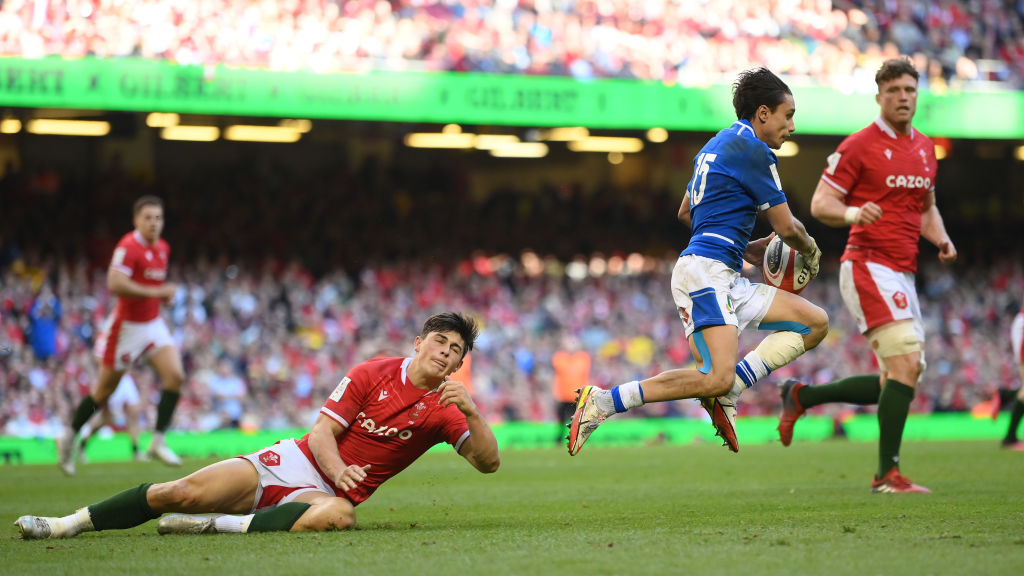
Ange Capuozzo of Italy gets away from Louis Rees-Zammit (Getty Images)
Parisse has been enthused by the depth created and approach favoured by Gonzalo Quesada since the Argentinian took the helm in 2024. The pair worked together at Stade Français, winning a league title and Challenge Cup as head coach and captain, and Parisse is a big fan of Quesada’s ability to blend Latin flair with a more northern European rugby pragmatism.
“When Kieran Crowley was (Italy) coach before Gonzalo, he tried to play a very aggressive style. Sometimes it was a bit kamikaze, trying to play too much. He was right to try to have the team play a more attacking game, but you have to balance the risks.
“Today, Gonzalo has built a team that has different ways to go about its business. They have players in the front five who can attack and play with the ball in hand. It’s not just about the lineout drive.
“They have a very innovative attacking style. They try to speed up the game, which is something that might go against what people think of as the traditional Italian brand of rugby.
“In many departments, especially in the back row, there are many options. There are many players, so it’s more difficult for the coach to make selections.
“There’s a lot more competition and that only benefits the team. There’s been a lot of work that has come to light in the last three to four years that actually began 20 years ago when structures were put in place.
“Maybe the process was a bit too long. Maybe we thought we would have players of a certain quality a little earlier. But today, if we look at the national team, I’m very positive about the future of Italian rugby.
“I think that Italy has gained the credibility of a team that is capable of playing at a high level. This generates respect and expectation. Today there is greater expectation around the team, even in a competition like the Six Nations – they’re not seen as dead certs for the wooden spoon because they have proved that they can create difficulties for all the other teams.”
So much so that Italy earned its first ever win over England in the 2026 Six Nations as they finished fourth in the Championship.
Read more: What is the wooden spoon?
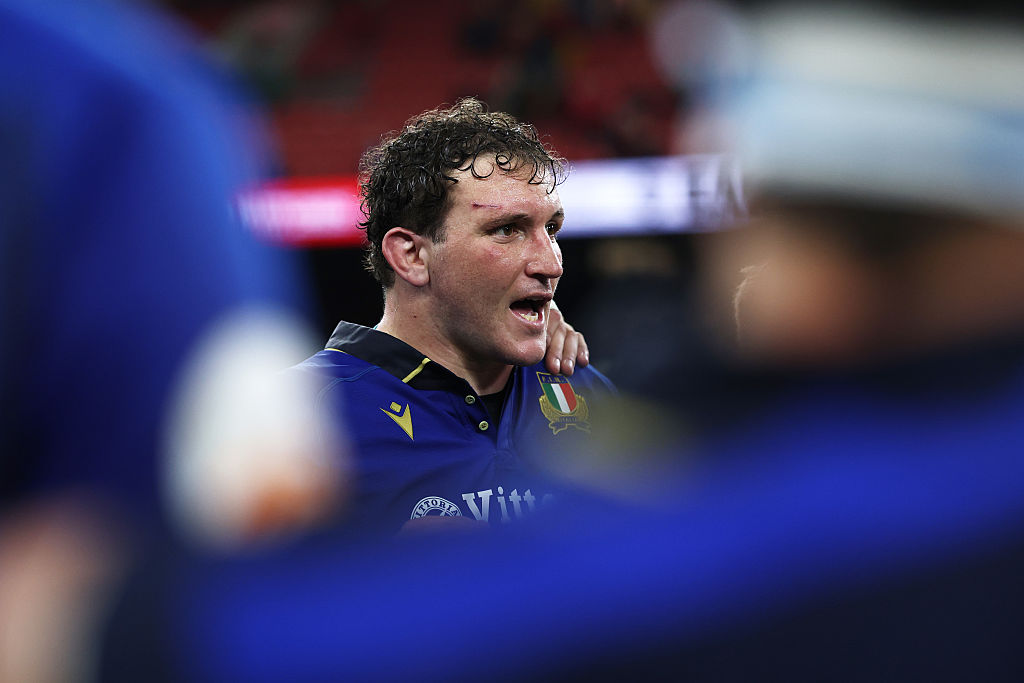
Michele Lamaro of Italy speaks with players of Italy as they huddle after the Guinness Six Nations 2026 match between Wales and Italy at Principality Stadium (Getty Images)
Parisse praises both the individual impact and leadership style of Michele Lamaro, the man who now carries the flame as captain. “The big thing is that Michele is not alone,” he says, referencing how relatively young but already experienced players such as Paolo Garbisi, Lorenzo Cannone and Tommaso Menoncello help drive the team forward in tandem with older heads like Juan Ignacio Brex.
“Gonzalo doesn’t want just one captain, one leader on the field. I was his captain at Stade, but right alongside me I had guys like Pascal Papé and Julien Dupuy, who were always there to help and offer their own expertise. Successful teams need more than one leader and Gonzalo understands that.”
Growing up in Argentina, the closest Parisse got to the Five Nations was when the Copa Latina brought France (as well as Italy and Romania) to Buenos Aires and Tucumán in 1995. “They didn’t even show the games in Argentina back then,” he recalls.
“As a young child, I could never have imagined Italy being in the championship, never mind playing for Italy in this great competition. It’s the most difficult, but also the most beautiful, tournament in the world.
Download the digital edition of Rugby World straight to your tablet or subscribe to the print edition to get the magazine delivered to your door.