





What is life really like for British and Irish players who make the leap across the Channel? RW spoke to them to find out…

There’s a perception of Brits abroad. And in case you’ve been living under a rock, it’s not particularly positive. But forget the loud, brash lager louts or inconsiderate tourists who daren’t speak a word in a foreign language as everyone speaks English…
Across the Channel, there is now a whole host of British and Irish rugby players not only enjoying themselves in France but excelling for clubs on and off the field.
For some it is an end-of-career swansong in the sun, for others a much-needed professional lifeline. But whatever the circumstances that brought them and their boots to the Top 14 or Pro D2, there’s a general consensus that when it comes to rugby, France is a superb place to be. And you can see why.
Before we start waxing lyrical and turning all Francophile, it’s worth pointing out it’s not for everyone. A certain Owen Farrell is happily back home in Hertfordshire after a disastrous sole season at Racing 92, for instance. Others, like former Ireland wing Simon Zebo, have flourished in the capital. Granted the Munster man had a big leg up by virtue of his dad being French and therefore knowing the language, but his three-year stint at les Ciel et Blanc was a standout career highlight.
Read more: How to watch this weekend’s Champions Cup action anywhere in the world
Zebo: ‘I loved it… that being your life, not just your holiday mode’
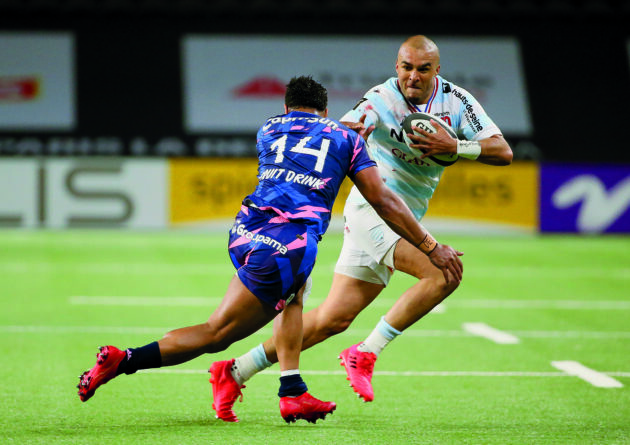
Simon Zebo of Racing 92 during the Top 14 match (Getty Images)
“It was an easier integration than, for example, Finn (Russell), who was picking up the language and a new culture all in one go,” the Premier Sports pundit tells us. “I was able to pick everything up fast and that meant I was able to fit into the rugby rather quickly as well, which was great.” For Zebo, Paris is what you make of it.
“I loved getting properly immersed in the culture. It was class, like, going to the parks and going to the boulangeries and that being your life, not just your holiday mode. Day-to-day stuff was class.
“Playing for one of the best clubs in France, playing in the (La Défense) arena and playing around some of the best players in the world. We had an amazing team at the time and seeing that from a rugby perspective was class.
“I would just say as a city it’s amazing that you can be as quiet as you want, or you can be in the Champs-Élysées and you could have the best nights out, dinners and restaurants. It can be as noisy or as quiet as you like, so we were in a good area for everyone.”
Read more: How to watch Champions Cup
One upcoming move to France has made rather a large amount of noise in rugby circles in the UK. Tom Willis had established himself as England’s first-choice No 8 after returning to the Gallagher PREM with Saracens after a year at Bordeaux following the demise of Wasps. Willis was even the beneficiary of an enhanced England deal, meaning he was guaranteed around £160,000 for this 2025-26 season regardless of how many times he pulled on the rose.
Nobody predicted that he would never take to the field. But after it transpired that Willis had re-signed for Bordeaux from next year, Steve Borthwick took the view that he was surplus to requirements after effectively ruling himself out of contention for the 2027 Rugby World Cup.
British players in France: Why has Tom Willis chosen to move to France?
Perhaps it will work out better for both parties. Willis is joining the reigning European champions after all. Plus Tom can’t help but notice just how happy his brother Jack continues to be in Toulouse. He was even honoured as the Top 14’s best player for last season and shows no signs of slowing down at the European giants.
England didn’t seem to miss him either as Borthwick’s men went four from four in the autumn and Ben Earl put in four stellar displays from the base of the scrum. Regardless, it’s still a ballsy move. “Rugby is such a short career,” says Dan Robson, who played with the Willis brothers at Wasps before he was also forced to look abroad with Pau.
Read more: Who are the Champions Cup past winners?
“I don’t think he would be on any more money coming to France. He might just want to come for the mental side and life experience that he wasn’t getting in England.
“You can only respect that. It says a lot that the starting England No 8 wants to do this for himself and his family instead of that. I think he saw Jack over here and what he was doing, which probably gave him extra motivation.”
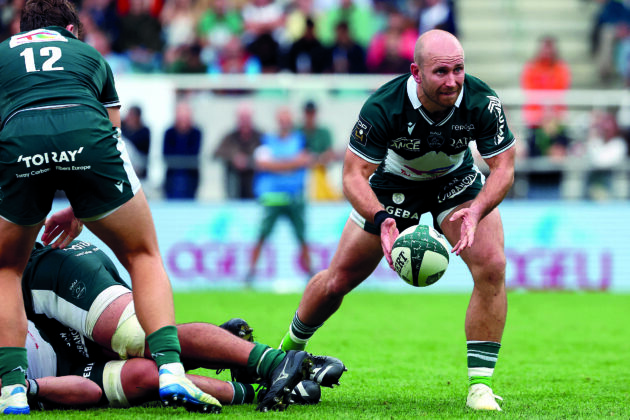
Pau’s English scrum-half Dan Robson grabs the ball during the French Top14 rugby union match between Section Paloise Bearn Pyrenees (Pau) and Stade Francais Paris (Getty Images)
Robson takes my call poolside in Pau where the temperature is approaching 20 degrees despite it being November. You can see the appeal of this lifestyle immediately.
Robson: ‘It was a massive culture shock’
Things haven’t always been so rosy, though. The 14-cap England international is a highly-valued part of the set-up at Section Paloise now but admits he had to embrace a “massive culture shock” after moving his entire life to a new country where he didn’t speak the language midway through the 2022-23 season at a drop of a hat.
“I flew over on my own at the start with basically a couple of kit bags. My wife drove over with her parents, who had a campervan.
“We shoved a load of stuff in the campervan and they did a little trip over. I was in a hotel for the first week, then an Airbnb, then found a house, then another house once I’d re-signed. It was a lot, especially after what had happened, but we understood the difficulties and wanted to try something new and different.
Read more: Champions Cup and South African struggles
“It was a massive culture shock. The advice I had was always to just embrace it and not think too much. It did take a while, especially being mid-season. I went straight into games, coming from the English set-up at Wasps, and was thrown into a totally new environment and new way of doing things.
“It’s not that one way is right or wrong, but it felt very different. As soon as you start embracing it and living the French way, you do start to settle in pretty quickly.”
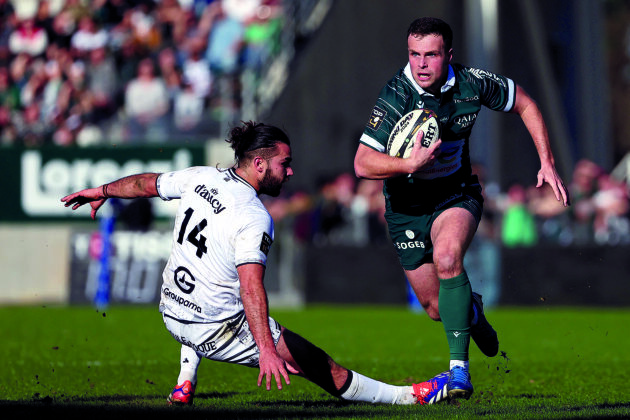
Pau’s English fly half Joe Simmonds (R) runs with the ball (Getty Images)
Former Leicester ten Zack Henry helped him in the early days but it’s another Englishman who often wears that shirt now in Joe Simmonds, the man who captained Exeter to a PREM and Champions Cup double in 2020. His former half-back partner at Chiefs, Jack Maunder, referred to ‘Sizzle’ as the Prince of Pau. When we caught up with the man himself, he does seem to be loving it bar one key facet.
What do British players in France miss?
“Honestly, French food is a bit overrated for me,” Simmonds tells us. “English food is underrated! They do good food here but I miss good English pub food, like roast dinners. I miss the general pub experience – sitting down, having a Guinness and eating off the pub menu. I also miss Nando’s!
“And they don’t do a very good breakfast – it’s just croissants, which isn’t ideal for an athlete.”
While his palate may yearn for home, Simmonds has found a sense of freedom away after escaping the Exeter bubble. “My mindset has changed. I feel more relaxed. In Exeter, I always felt the pressure to prove something. Moving here, not many people knew who I was and I have that freedom now. I don’t feel pressure on my shoulders; I can just play my own game.”
Read more: When was the last time a British or Irish team won the Champions Cup?
Getting out on the golf course with the better weather helps him switch off from the day job. On top of that, the beaches of Biarritz are an hour away while the Pyrenees mountains are a similar journey. Simmonds has made good friends with both the foreign and French crew but admits the different way of socialising in France took some adjusting to.
“The social side is probably the main difference,” he adds. “In England, there’s a big pub and drinking scene with lots of socials, especially at Exeter.
“France is completely different – it’s more about restaurants and longer meals. It was something that I had to adapt to.”
Nowell: ‘It took a while to settle into life in France’
Another former Chief born and bred in England’s South-West but plying his trade in the Top 14 is Cornishman Jack Nowell. The 2017 British & Irish Lion is playing under Ronan O’Gara at La Rochelle after leaving Sandy Park in 2023.
While living on the idyllic Île de Ré is a pretty nice perk of his new job, Nowell confesses that his family’s first six months in France were not without their challenges. “I feel very lucky in this team that everybody is a good lad. They made sure I was welcome straightaway,” Nowell tells us.
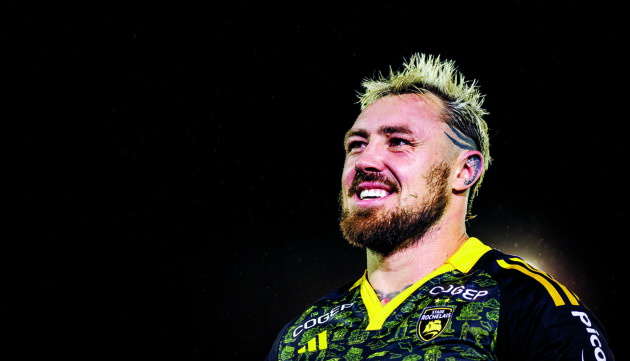
La Rochelle’s Jack Nowell during the Investec Champions Cup match between Bath Rugby and La Rochelle (Getty Images)
“The struggle was probably the family side of it. The kids starting a new school, making sure my wife’s happy and things like that, but I’d say after six or seven months of persevering and making sure the kids are all right, we finally got to the other side and the kids started loving school and speaking French. Then it was a lot more enjoyable.”
Nowell is not as proficient as his kids in the language but insists he’s giving it a good go, even if other expats might be leading the way. “You look at boys like Jack Willis up at Toulouse and you see the way he’s speaking French, doing team talks and stuff, and I feel like I’m miles away from that level. I get a bit of stick from the lads here, but I think the main thing is as long as I’m trying and understanding, that’s all you care about.”
Read more: Who is Jack Nowell? What you need to know about the former England winger
We try and suss out whether the stereotypical view that there is an abundance of baguettes on offer is true and Nowell is happy to oblige. “That isn’t a rumour. There are baguettes for breakfast, lunch and dinner. But I am going to be biased and I’ll say the baguettes are a lot nicer over here than they are at home.” No complaints here. Toulon’s David Ribbans agrees to the extent that he’ll never buy supermarket sliced bread again.
Nowell enjoys testing himself against the best of the best in the Top 14. “It’s probably a bit more physical than the PREM but not as quick. There’s a lot of big boys.” Luckily for him, one of them in Will Skelton is on his own team.
British players in France: ‘It is unbelievably physical’
It’s not just the top division where French rugby packs a punch, as our hour-long chat with Agen nine Maunder reveals. “Pro D2 is unbelievably physical. The rucks are tough, especially being a nine. They are brutal! A few more loose feet on the fingers… There is slightly more on-the-line play. That’s the best way to put it as I’m still here!”
Maunder, who picked up an England cap off the bench in Argentina in 2017 – a game that is now probably best known for also marking Tom Curry’s debut – says that momentum is massive in French rugby. Once teams get on a roll then it’s very hard to stop them.
“I’ve never experienced such big swings in momentum in games. Anybody in the league, once they get a hot hand, are hard to stop.” Emotion plays a large part in that. “They live and breathe it here. It’s the biggest thing that happens in the week. Every week is do or die and feels like a World Cup final.”
Read more: The key details about the 2027 Rugby World Cup
That importance filters into how the pro teams prepare. “Fridays are more important here. It’s a lot more of a psych-up and big team talk. There’s more Churchillian-style leadership I’d say.” Maunder points out how due to the Espoirs academy, a lot of lads have played together since the age of 15 or 16 and understandably that builds closeness.
“There’s very much a culture here of playing for Agen, or where you’re from, and that being the most important thing you’ll ever do, which I think is really lovely. In England, winning is important but you’re pragmatic.”
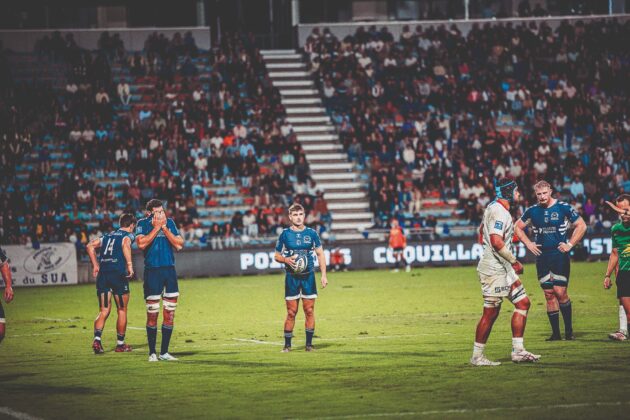
Jack Maunder during a match (Getty Images)
If it wasn’t for the demise of the Melbourne Rebels, Maunder might still be happily kicking around in Australia where he and his now wife were settled and he’d enjoyed learning a more expansive brand of play. But as is a far-too-common tale, they had to leave that all behind and make a fist of things in France. Everything happens for a reason and all that and now Maunder is savouring the French rugby experience. “When you’re winning here, it’s the best thing in the world.” Big praise indeed.
British players in France: How difficult is it to pick up the language?
As for his French, it’s come on since the faux pas he made in negotiations. “It’s a lot better than when in my initial interview I called the head coach Madame! As soon as I said it, I realised I’d f***ed up.
“I started lessons as soon as I knew I was coming but if a plumber turned up in five minutes, I wouldn’t have any idea what to say to him. That’s how I’d put it.”
Read more: Premiership fixtures
Such is the ferocity of feeling and home support, you daren’t lose home games in France. It’s sacrilege to get turned over on your own patch. “The home and the away mentality is the other main difference,” adds Maunder. “It’s changed a bit this year but teams at the bottom can thrash those higher up at home. You just have to roll with the punches a bit.”
Like Maunder, Robson is a nine and communicating with referees in a foreign language is tough, but they also don’t seem to be as responsive to dialogue as the Gallagher PREM officials. “The refereeing for a start is different, to say the least. There are communication struggles because of the language. I was used to being able to chat to the referee for 80 minutes. Here, it’s more inconsistent and you have to figure things out on the hoof. You have to learn and play with it and not get frustrated.”
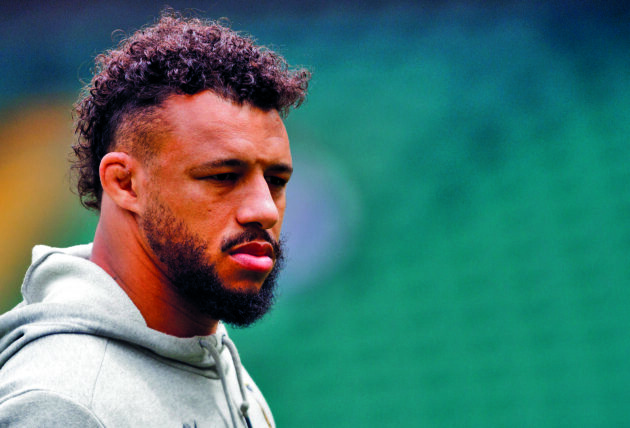
Courtney Lawes during the Gallagher Premiership Rugby Final match between Northampton Saints and Bath Rugby (Getty Images)
On our trip to Brive, a certain Courtney Lawes also exhibits plenty of frustration towards a new style of reffing. Even if he is a bit more guarded when we start recording. “For Northampton, I never got yellow cards, but over here in France I seem to be getting loads,” he tells us. Former Harlequins and Bristol prop Kyle Sinckler, now at Toulon, raises a valid point about the lack of professional refs. “You get a big advantage when you’re at home and then when you’re the away team it can be tough sledding at times, but that’s the way it goes.
“In the French league, I think there are only two professional refs. The others have normal jobs – they’ll be a school teacher or something Monday to Friday, and rock up to the Top 14 on Saturday.”
Players destined to play in France
Some players just suit the style of play across the Channel. And Pau’s Carwyn Tuipulotu is one of those. The big No 8 couldn’t carve out much game time at Scarlets and then after a brief loan spell at Saracens he got the chance to come out to France. He hasn’t looked back since. “The Top 14 is beautiful chaos,” he explains. “They play attractive rugby, so it suits me. And obviously some teams are very direct and physical, and I think Section Paloise have a playing style with the big forwards that they’ve got. So I definitely suit the way they play and the game plan.
“I just told them to give me the ball and I’ll run it, so it was pretty simple from that point of view. I made my intentions clear.
“I’ve found that in the Top 14 anyone can win, like anyone could beat anyone. And it’s an exciting league. It’s one of the best in the world, so yeah, it’s really good. A good place to develop my rugby.”
Read more: What is a HIA?
Even when injury strikes, it’s hard to get too downbeat. Tuipulotu tells us he’s about to head to San Sebastian with his old Ospreys mate Harry Williams to go pintxos bar-hopping. Sounds delightful. It may be pretty idyllic now but it was a move that could have gone wrong for the 24-year-old. “I wasn’t really keen on moving at first. I was kind of scared, just away from family, but I think I needed to be out of my comfort zone. Because it was a big risk at first, and then I guess I kind of just started enjoying my rugby more.”
It’s hard not to feel a little bit smug when looking back across at the dire state of Welsh affairs. He feels for his former colleagues and friends at clubs there but definitely doesn’t envy their plight, with one of the Ospreys or Scarlets set to be chopped by the WRU.
“My agent was telling me about the regions moving down to three clubs and it’s obviously really sad because I know a lot of the boys back in Wales. And obviously, I was there when all the conversations started happening, and it was a bit nerve-wracking and anxiety-inducing. But I definitely feel glad that I’m out here in France.”
British players in France: Beware the late kick-offs
There is one common complaint across our chats with Brits in the top two divisions of French rugby. The 9pm kick-offs are alien to them. Supposedly because the French like to sit down to eat at 8pm and then flick the TV on after, it’s primetime viewing for Canal+. But for the players trying to peak at the right time, it can cause havoc with your preparation.
David Ribbans told us he was absolutely knackered when he made his debut off the bench for Toulon on a Sunday night. Many of the locals will get a nap in and it’s customary for teams to meet up a good five hours or so before kick-off and then relax before the big kick-off. However, if like Maunder you aren’t able to kip in the day then it’s an exercise in maintaining your energy. That’s before you even factor in the travel time if you’re on the road.
“I’ve arrived back home at 7am the next day after Nevers and Valence this season,” explains Maunder. “The six, seven, even eight-hour bus trips and then you’re in on Sundays too. Not training on Sundays in France is a myth. We have our big review days and gym!”
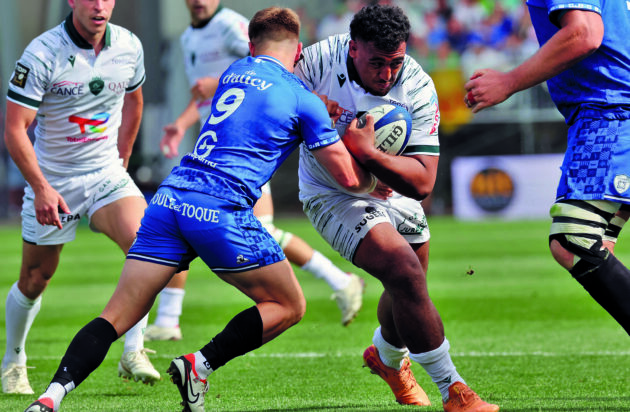
Vannes’ British center Stephen Varney (L) fights for the ball (Getty Images)
Mako Vunipola has had a similar experience at Vannes where there is plenty of attention to detail, even if France tends to favour a slightly less structured game. “They are big fans of leaving no stone unturned. They spend a lot of time in the club; the days are long and we’re in five days a week, including the match. The days aren’t simple either – there are quite a few meetings and a lot of on-the-field stuff for a long time sometimes. In terms of how they play the game, it’s probably a little more leaning towards players expressing themselves than it probably is about how we want the team to deal with certain things. Having to be in as much as possible, or training on a Sunday, has been difficult to get used to.”
The gruelling schedule of French domestic rugby
The gruelling schedule in terms of matches, time spent training at the club and the travelling involved with a schedule that can see you playing anywhere from Thursday to Sunday depending on your league and TV games will eventually take its toll if not managed correctly.
That might be physically exhausting but it’s mentally tiring not only getting to grips with the language but getting on top of all the micro communications you need on a rugby field. It’s one thing being able to order a steak frites, it’s another conducting a forward pack around the park or barking out lineout calls under the lights.
Read more: England fixtures
“I like to speak with the boys because I definitely learn a lot more outside of the classroom, just when I’m chucked into the deep end,” explains Tuipulotu. His favourite phrase is ‘c’est pas grave’ which means it’s not that serious. Chill out. A helpful one. It’s not just the on-field comms that can be hard to get your head around as there’s a whole host of life admin that comes as standard with Channel-hopping for rugby. Robson adds: “The language is a huge thing. At first, you’re settling in and people at the club speak English. But then the day-to-day stuff – paying bills and pretty simple jobs – suddenly becomes difficult as you can’t communicate what you’re saying or what they’re saying. That was the biggest eye-opener and toughest thing.”
So if you like warm weather, tough rugby and fine food, France is the place to be. Even if you have to play late and realise nothing happens quickly. After all, good things come to those who wait.
Download the digital edition of Rugby World straight to your tablet or subscribe to the print edition to get the magazine delivered to your door.